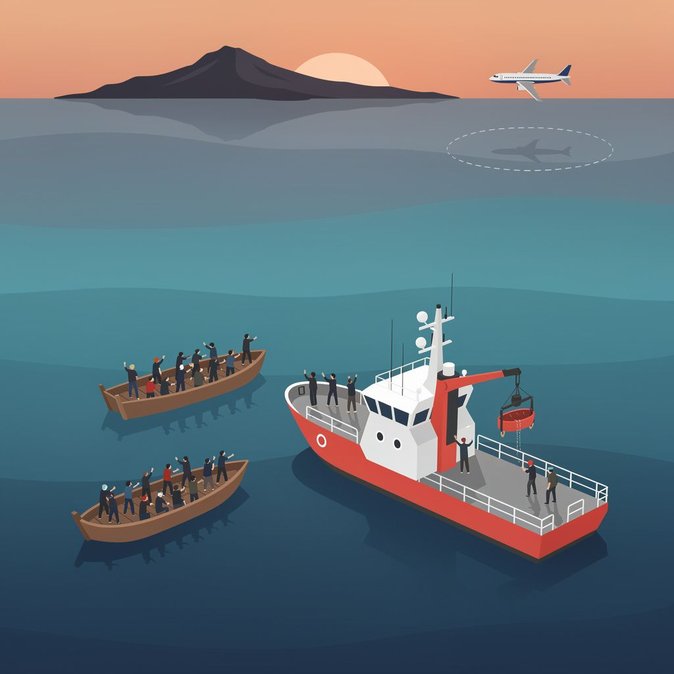
Spain’s maritime-rescue service intercepted two overcrowded wooden cayucos on 11 October—one near Gran Canaria and another off Lanzarote—bringing more than 300 people safely ashore. According to RTVE, the larger vessel carried over 200 individuals, including women and minors; the second had 96 occupants. The rescues occurred amid calm seas that continue to draw record numbers along the ‘Ruta Canaria’, already Europe’s deadliest migration corridor in 2026 with at least 525 confirmed deaths. Medical NGOs reported cases of severe dehydration and hypothermia, underscoring the humanitarian stakes for responders and port authorities who must screen arrivals for tuberculosis and other communicable diseases. For insurance and corporate-security departments moving staff or contractors to the Canaries, the steady flow of rescue operations can disrupt ferry traffic as SAR zones are temporarily closed. Employers should build extra slack into supply chains and check AENA airport notices, as medevac helicopters occasionally restrict airspace over tourist corridors. Spanish authorities transferred the rescued migrants to the Barranco Seco macro-centre, already operating above 120 % capacity. The Interior Ministry is negotiating charter flights for voluntary returns to Senegal and Mauritania, but those programmes remain politically sensitive and logistically complex. The incident adds urgency to calls from the Canaries and Andalusia for a permanent EU solidarity mechanism that reallocates arrivals more evenly across member states—a proposal expected to surface at the next Justice and Home Affairs Council.
Source: RTVE