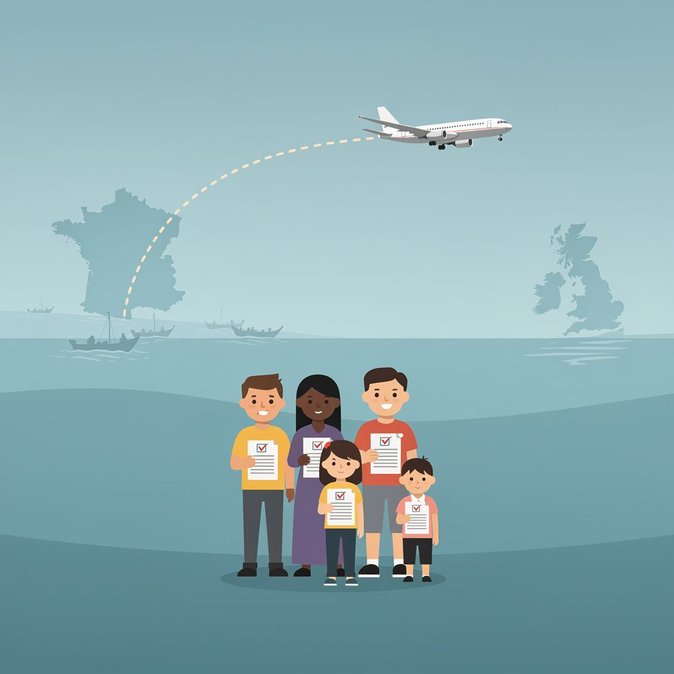
An in-depth Guardian report has revealed growing pressure on the UK government to pilot a humanitarian ‘visa-to-travel’ model for Channel migrants after the collapse of the UK-France ‘one-in, one-out’ exchange scheme. Under the now-scrapped arrangement, each irregular arrival returned to France was matched by the legal transfer of one refugee to Britain; only about 1,500 people moved in either direction before both governments conceded the mechanism was unworkable at scale. Front-line NGOs Utopia 56 and Médecins Sans Frontières told the newspaper that police violence on northern French beaches has risen 40 % since the UK increased funding for French patrols. The Public and Commercial Services (PCS) union and Care4Calais have drafted a proposal allowing asylum seekers to apply for a time-limited entry visa abroad and lodge their claims on UK soil, eliminating the small-boat market. Why it matters for business – Sustained small-boat arrivals and periodic protests at Dover have already prompted freight operators to reroute high-value cargo via the Hook of Holland and St Malo, adding costs and journey time. Corporate relocation teams also face reputational risk as public debate intensifies over safe-and-legal routes. A formal visa-to-travel pilot could, if adopted, reduce ad-hoc closures of the A20 and A2 triggered by migrant incursions and improve supply-chain reliability. Policy horizon – While the Home Office insists its focus remains on deterrence, officials privately acknowledge that elements of the EU’s humanitarian corridor model are being studied as part of the Immigration and Asylum Bill’s committee stage. Any new visa channel would sit alongside the recently-reopened UK Resettlement Scheme and require changes to the Immigration Rules Appendix ‘Safe and Legal Routes’. Next steps – Parliament’s Home Affairs Committee is expected to take evidence on alternative Channel solutions later this month. Multinationals should monitor hearings for indicators that voluntary corporate sponsorship of refugees—similar to Canada’s model—could emerge, potentially opening a new talent pipeline while meeting CSR goals.
Source: The Guardian