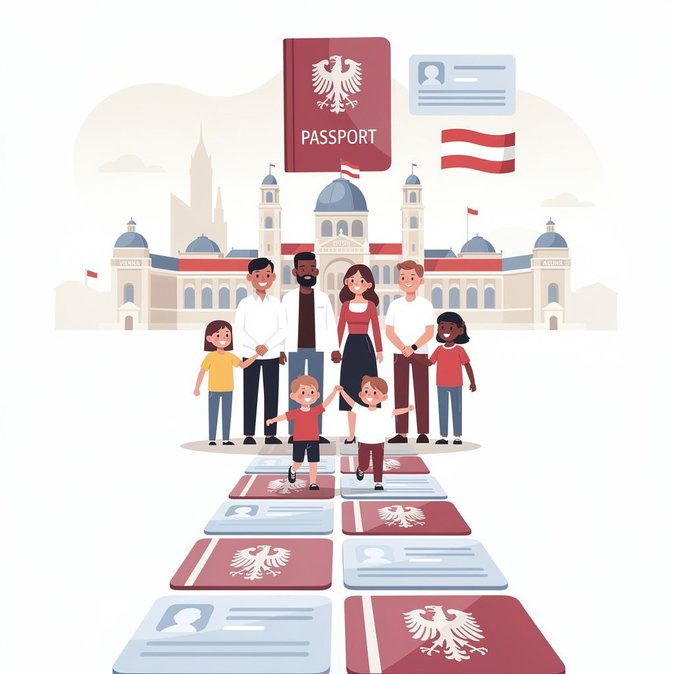
A new civil-society initiative called “Ein Pass, der passt” (“A Passport that Fits”) was launched in Vienna on 21 October 2026 to press the government to modernise Austria’s nationality law and grant automatic citizenship at birth to children whose parents have lived legally in the country for many years. Under Austria’s current jus sanguinis regime, being born on Austrian soil does not confer citizenship; foreign-national parents must normally wait until their children have lived in the country for at least ten years (or six in cases of ‘exceptional integration’) before they can apply. Campaigners argue that the rule leaves nearly 200,000 Austrian-born youngsters technically “foreigners” despite never having lived elsewhere. The group has opened an online petition and is calling on major parties to support a bill before the next National Council session. Supporters point out that neighbouring Germany reformed its nationality act in 2024 to allow children of foreigners legal at birth when at least one parent has held a regular residence permit for five years. They insist a similar model would help Austria compete for international talent and reduce bureaucratic hurdles for companies relocating staff with families. Business-mobility specialists note that Austria’s tight citizenship path is a sticking point for multinationals placing executives in Vienna or Salzburg for long assignments. “Clients often worry about the long-term status of their children,” says Martina Pöschl, partner at a leading relocation firm. “Automatic citizenship would remove uncertainty and increase Austria’s attractiveness as a regional HQ.” If the proposal gains traction, employers could see a smoother transition from temporary residence (e.g., Red-White-Red Card) to permanent settlement and eventually dual citizenship for key staff. However, the conservative ÖVP and right-wing FPÖ have historically resisted any move toward birth-right nationality, citing integration and security concerns. The coming weeks will show whether the petition can gather the 100,000 signatures usually needed to trigger a parliamentary debate. For foreign professionals already in Austria, the campaign is a reminder to keep residence records up to date: proof of uninterrupted lawful stay, German-language certificates and civic-integration evidence remain critical for any future citizenship application, regardless of whether the law changes.
Source: The Local Austria