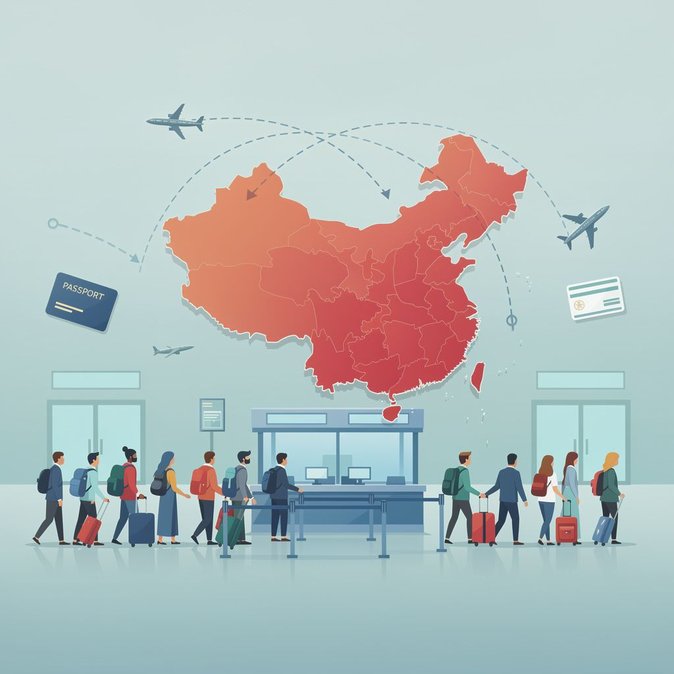
The National Immigration Administration (NIA) published its third-quarter traffic bulletin on 23 October, revealing that officers processed 192 million exit-entry movements between July and September—an increase of 7.9 % year-on-year. Mainland residents accounted for roughly half the flows, but the stand-out figure was the 23.27 million crossings by foreign nationals, up 15.6 %. Officials credit the jump to China’s expanded unilateral visa-free entry programme. Since early 2026 Beijing has successively waived short-stay visa requirements for 50 countries and lengthened its 240-hour transit-without-visa scheme to 57 countries and 65 ports. Combined with summer schedule up-gauging by international airlines, corporate mobility managers are again putting China back on regular rotation for executive visits and project start-ups. For multinationals, the headline numbers confirm what travel desks have been seeing in booking data: the mainland’s border infrastructure is now handling volumes close to— and in some segments above—pre-pandemic 2019 levels. Travel-risk consultancies, however, caution that the new Exit-Entry Administration Regulation (effective 15 September) gives authorities greater discretion to conduct secondary inspections or impose exit bans in security-sensitive cases. Companies are advised to vet staff itineraries carefully, ensure devices are clean of sensitive IP, and allow extra time at the airport for first-time travellers. Practically, higher foreign traffic is shortening average immigration-clearance times only at ports that have installed next-generation e-gates. Airports such as Guangzhou Baiyun and Shanghai Pudong now offer on-the-spot biometric enrolment; once a traveller is registered, the e-gates work nationwide. Employers should encourage frequent flyers to enrol on their first trip to shave 10–15 minutes off each subsequent arrival or departure. The NIA bulletin also lists the top outbound destinations for mainlanders: Hong Kong, Macao, South Korea, Vietnam, Thailand, Japan, Singapore, Malaysia, Russia and Indonesia. Mobility managers with regional hubs in those markets can expect fuller flights and tighter hotel inventory through year-end as Chinese leisure travel rebounds in tandem with business traffic.