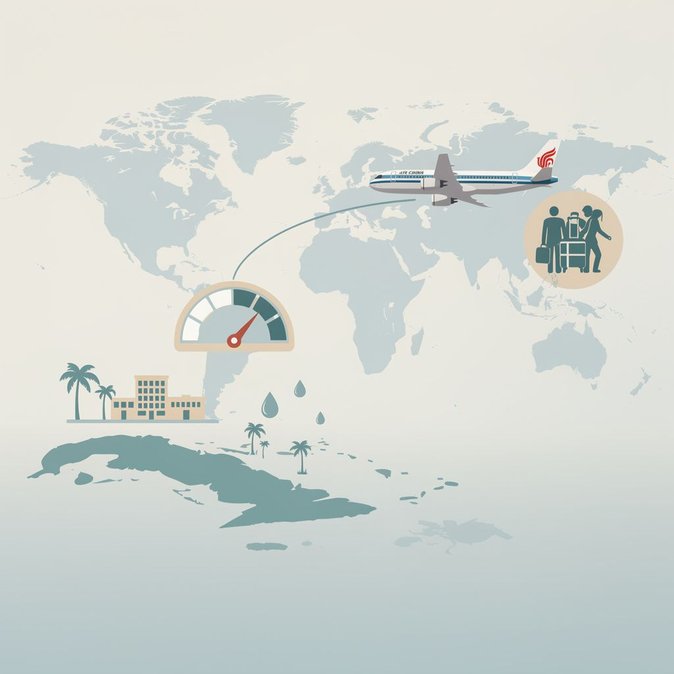
Air China scrambled an extra Beijing–Havana service (flight CA590) on 20 October after Cuba’s worsening fuel shortages forced repeated cancellations of its regular CA866 rotation, leaving hundreds of Chinese nationals and connecting passengers stuck in Havana. According to the Chinese embassy notice quoted by the South China Morning Post, the one-off flight collected travellers whose tickets dated back to 10 October and earlier, then operated a non-stop sector to Beijing via a technical refuelling stop in Madrid. The episode highlights the operational fragility of ultra-long-haul routes that rely on ground-fuel availability in emerging markets. For mobility coordinators, the disruption underscores the importance of contingency clauses in travel insurance and the need to register employees with local embassies when they are stationed in energy-constrained destinations. The embassy said it is liaising with Cubana de Aviación to secure backup fuel allocations, but warned travellers to expect ‘rolling schedule adjustments’ until at least mid-November. Companies repatriating staff should note that Cuba requires exit permits for international charter flights; Air China processed these in bulk, but individual travellers must still clear customs and immigration in person at José Martí International Airport. On the China side, returning passengers were funnelled through dedicated health-declaration lines that remain in place for arrivals from the Caribbean due to sporadic dengue outbreaks. From a policy angle, the incident could accelerate Beijing’s push for wider bilateral air-services agreements that allow Chinese carriers to tank at third-country hubs when fuel is unavailable at the origin. Similar arrangements exist on Zimbabwe and Venezuelan routes, where Air China regularly stages through Addis Ababa and Madrid. Mobility managers should brief travellers heading to Cuba that flexible tickets and extra-territorial medical coverage are now corporate-duty-of-care essentials. Where feasible, routing via Mexico City or Toronto with a North American carrier may offer more predictable lift until Cuba’s fuel logistics stabilise.
Source: South China Morning Post