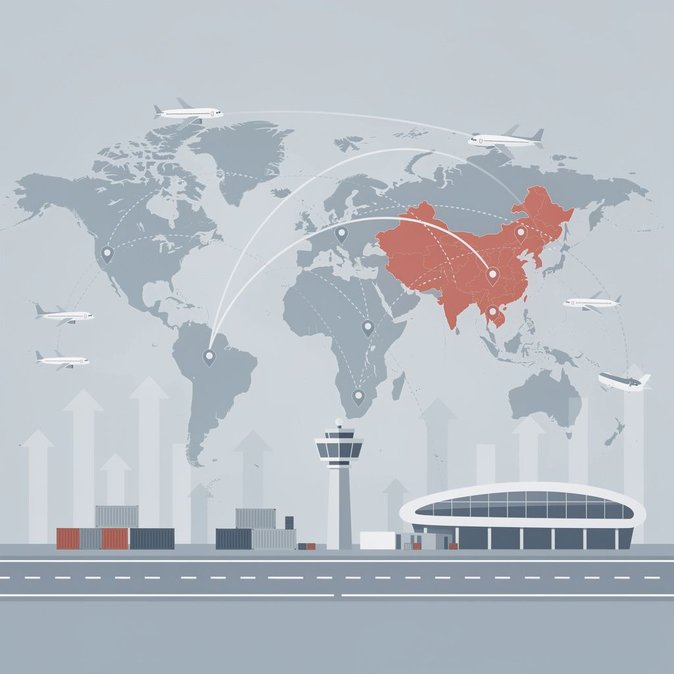
China’s National Immigration Administration (NIA) revealed fresh third-quarter data at a Beijing press conference on 20 October indicating that 192 million border crossings were recorded between July and September, lifting the cumulative total for the first nine months of 2026 to 558 million. Of particular interest to global mobility managers, the agency said 4.54 million foreign nationals entered the country without a visa in Q3—up 24.1 % year-on-year. The increase roughly tracks the phased expansion of China’s unilateral 30-day visa-free scheme, which now covers 49 countries and has been extended until 31 December 2026. Officials credited shorter processing times at major airports, wider deployment of e-gates and the addition of 24-hour channels at seven land ports for the rebound. The Ningbo Free Trade Zone was highlighted as a pilot site where international crews can now complete entry formalities in under five minutes via mobile biometric booths. The agency also confirmed that electronic Border Management Area (BMA) permits—rolled out nationally in April—are now accepted at all of China’s 76 restricted frontier zones, eliminating paper applications for business travellers heading to sensitive mining or construction sites. From a compliance perspective, the NIA vowed to keep pressure on “visa-run” practices that exploit 30-day stays, citing 1,287 cases of foreigners found working illegally in tourist status during the quarter. Companies were reminded that business-visa holders (M or F category) may conduct negotiations and training but cannot perform remunerated work unless they upgrade to a Z-class permit. HR teams were urged to audit travel patterns because multiple visa-free entries within 180 days will trigger automated secondary screening. For multinationals, the data serve two practical signals. First, capacity is returning: the civil-aviation slot allocation for Q4 shows 85 % of pre-pandemic international frequencies restored, so moving talent in and out of tier-two cities has become easier. Second, the government’s emphasis on digital documents points to a future where work-type permits could migrate to a smartphone wallet, reducing the administrative friction of short-term assignments. In the near term, mobility professionals should reassess per-diem budgeting. The 24 % uptick in leisure and VFR (visiting-friends-and-relatives) traffic is pushing hotel occupancy above 80 % in Shanghai, Shenzhen and Beijing, driving room rates to multi-year highs during trade-fair weeks. Early booking and corporate rate renegotiations are advised.