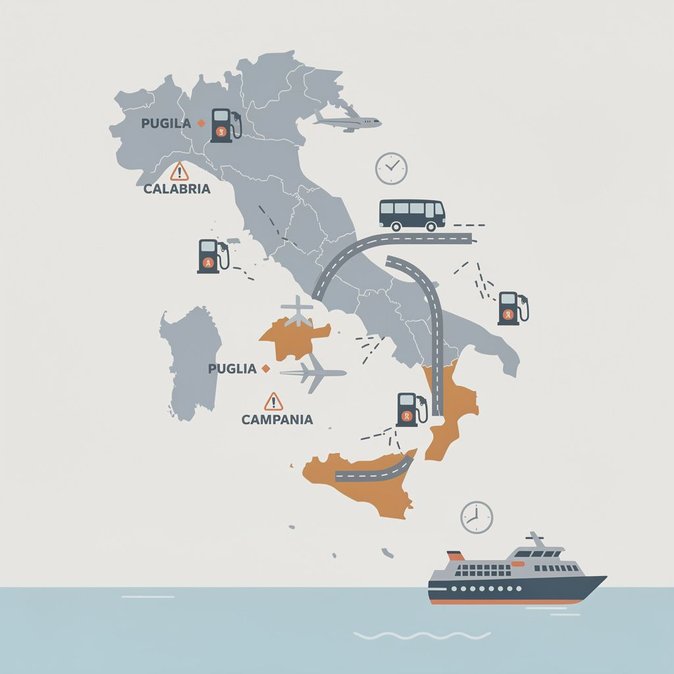
Italy’s fragile transport infrastructure faced fresh pressure on 22–23 October as two separate disruptions converged in the south. Road-haulage protests over surging diesel prices blocked deliveries of aviation fuel to Crotone and Reggio Calabria airports, prompting NOTAMs that warned pilots to tanker additional fuel until at least midnight on 24 October. Although airport operator SACAL said scheduled flights were running, contingency plans required carriers to uplift extra fuel at origin points, adding payload penalties and possible connection risks for cargo operators. At the same time, the Ministry of Transport’s strike calendar showed two four-hour walkouts by local-transport staff in Bari on 23 October, reducing evening bus and train frequencies in Puglia. The same unions have filed a nationwide 24-hour strike for 30 October that could hit airports, rail, ferries and highways. Compounding matters, regional bus company EAV in Campania suspended multiple routes around Naples and the Sorrento Peninsula after fuel deliveries failed to arrive. Ferry operators in the Gulf of Naples warned of possible sailing cancellations if roadblocks continue to impede diesel supplies for vessels. Business travellers heading to client sites in southern Italy should build in extra ground-transfer time and confirm that hotel shuttles and rental-car suppliers have fuel. Airlines routing crews through Reggio Calabria will need to monitor NOTAM updates and ensure duty-time limits take into account potential tech stops for refuelling. The dual crisis underlines the cascading effect that road-transport protests can have on the wider mobility ecosystem—particularly in regions where alternative rail or air links are limited. Employers with posted workers in the Mezzogiorno should review emergency-travel protocols and consider issuing per-diem allowances to cover taxi surcharges or last-minute lodging.
Source: FTN News / ScioperiItalia