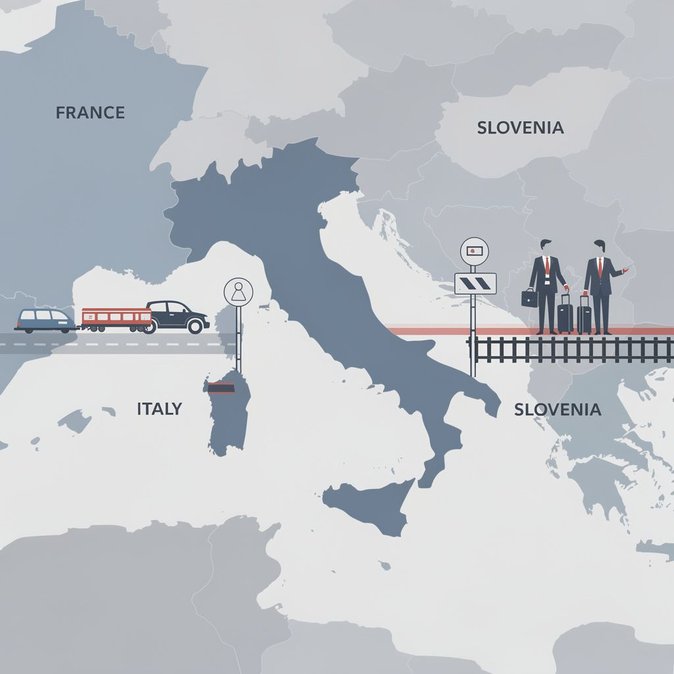
The Schengen Traveler facts-tracker, updated on 12 November, confirms that Italy’s temporary controls on its land frontier with Slovenia will remain in force at least until 18 December 2026. The European Commission authorised Rome to introduce the measure in June after a surge in irregular crossings via the Western Balkans route; extension requests are being assessed on a rolling basis. Italy’s measure now overlaps with France’s blanket internal-border controls—covering crossings from Italy as well as five other neighbours—renewed through 30 April 2027. Combined with Germany’s ongoing checks, travellers moving between the euro-zone’s three largest economies face document inspections on multiple legs, eroding part of the business-travel fluidity that Schengen once guaranteed. For companies, the patchwork raises planning complexity: staff driving from Turin to Lyon or Munich must carry passports or national ID cards and factor possible queues at Mont Blanc and Brenner tunnels. Logistics firms transporting “Just-in-Time” components between Northern Italy and Bavarian plants report average delays of 30–45 minutes, already prompting some to switch to rail freight. Airlines operating Milan–Nice and Venice–Munich routes continue to perform advanced passenger-data submissions required by France and Germany. While Brussels is pushing a revised Schengen Borders Code that would favour police “mobility patrols” over fixed controls, observers expect little change before the Pact on Migration and Asylum becomes fully operational in mid-2027. In the meantime, employers should brief travelling staff on ID requirements, allow generous buffers when scheduling meetings and check rental-car terms, as crossing into France may now trigger additional insurance documentation.