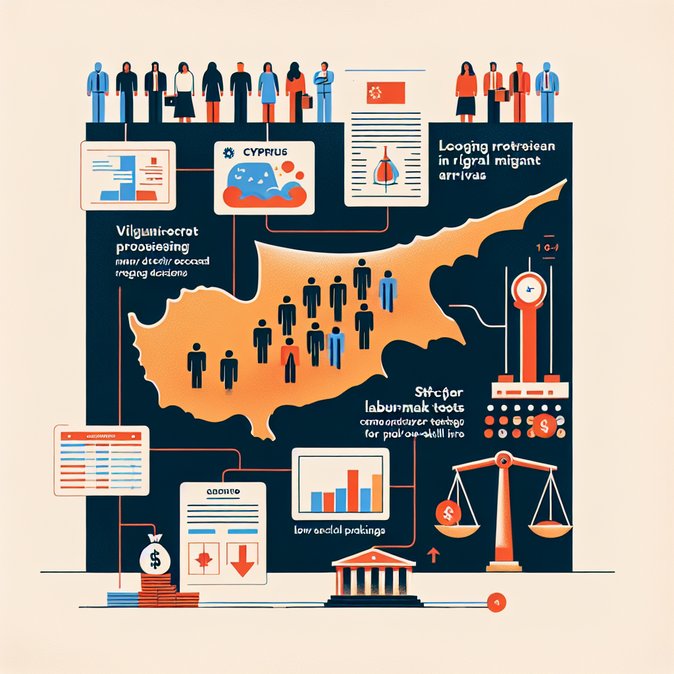
The Deputy Ministry of Migration and International Protection kicked off the new year by publishing end-2025 migration statistics that paint a radically different picture from the crisis years of 2021-22. As of 31 December, 169,844 third-country nationals held valid residence permits – equivalent to roughly 18 % of Cyprus’ population. Russians (40,583) and Britons (15,395) remain the two largest expatriate blocs, followed by Ukrainians and Filipinos.
Deputy Minister Nikolas Ioannides credited a ‘three-pillar’ strategy: accelerated asylum adjudication (average decisions now issued within 30 days), expanded voluntary-return incentives of up to €1,500 per person and intensified patrols along the UN-monitored Green Line. Combined, the measures cut irregular sea and land arrivals by 86 % compared with the first half of 2022 and slashed the backlog of pending asylum files by 26.5 % year-on-year.
![Cyprus Ends 2025 with 169,844 Foreign Residents as Irregular Arrivals Plunge 86 %]()
Employers have welcomed the data, noting that work-permit processing times for skilled staff and digital-nomad applicants have fallen to six weeks. However, the ministry signalled that labour-market testing for low-skill roles will tighten in 2026, nudging companies toward intra-EU hires or automation in hospitality and agriculture.
For global-mobility teams, the numbers suggest a more predictable permitting environment but also underscore the need to monitor upcoming rule-changes that could limit recruitment from third countries. HR departments are advised to audit assignment timelines and ensure biometric enrolments are scheduled well before the EU Entry/Exit System goes live in October 2026.
Deputy Minister Nikolas Ioannides credited a ‘three-pillar’ strategy: accelerated asylum adjudication (average decisions now issued within 30 days), expanded voluntary-return incentives of up to €1,500 per person and intensified patrols along the UN-monitored Green Line. Combined, the measures cut irregular sea and land arrivals by 86 % compared with the first half of 2022 and slashed the backlog of pending asylum files by 26.5 % year-on-year.

Employers have welcomed the data, noting that work-permit processing times for skilled staff and digital-nomad applicants have fallen to six weeks. However, the ministry signalled that labour-market testing for low-skill roles will tighten in 2026, nudging companies toward intra-EU hires or automation in hospitality and agriculture.
For global-mobility teams, the numbers suggest a more predictable permitting environment but also underscore the need to monitor upcoming rule-changes that could limit recruitment from third countries. HR departments are advised to audit assignment timelines and ensure biometric enrolments are scheduled well before the EU Entry/Exit System goes live in October 2026.
Source: VisaHQ Global Mobility News