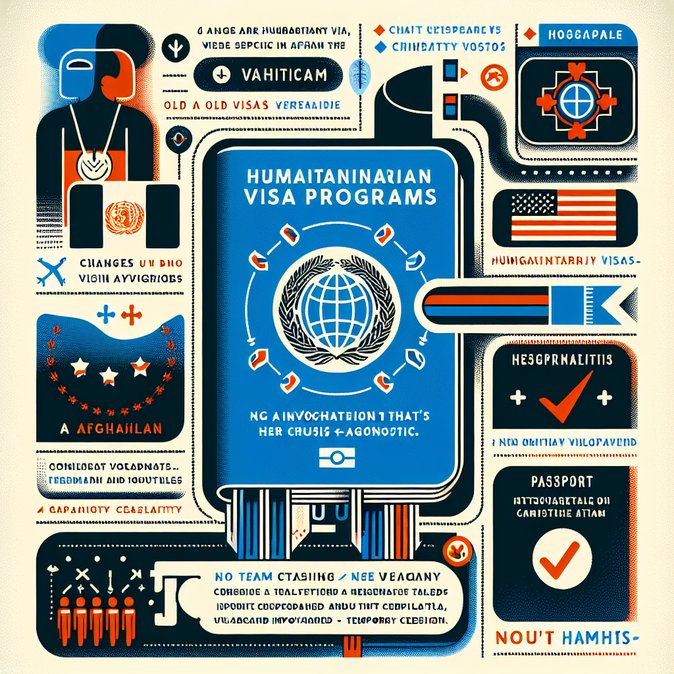
Brazil’s Ministries of Justice and Foreign Affairs have issued Inter-ministerial Ordinance 60/2025, in force since 1 January 2026, that sweeps away the patch-work of special humanitarian visas created over the past decade for Afghans, Haitians, Syrians and other at-risk groups. Instead of maintaining separate rules for each crisis, the ordinance erects a single legal framework under which the two ministries can publish joint acts—at any time—naming both the nationalities and the factual circumstances (war, environmental disaster, political persecution, etc.) that justify protection.
For mobility managers the immediate impact is procedural uncertainty. Until the first eligibility list is released, Brazilian consulates have paused the issuance of new humanitarian visas, and applicants already holding appointments are being advised to await further guidance or to convert to other visa classes where possible. NGOs that previously sponsored Afghan and Haitian evacuees must obtain a new “hosting commitment” accreditation that demonstrates accommodation capacity and integration support before their letters will be accepted by consular posts.
![Brazil Unifies Humanitarian Visa Regime, Retires Country-Specific Programs]()
The new model was shaped by lessons learned from the chaotic Afghan airlift of 2022, when thousands arrived in São Paulo within weeks and overwhelmed shelter capacity. Authorities hope the hosting-commitment requirement will distribute arrivals more evenly and give local governments time to scale services. The ordinance also keeps fees at zero and preserves the two-year temporary residence permit—with work and study rights—as the on-shore pathway to permanence.
Multinationals should monitor developments closely. If employees’ family members were planning to travel on the now-revoked country-specific visas, contingency planning (e.g., family-reunion or student routes) may be required. Companies that sponsor philanthropic initiatives will want to review whether their partner NGOs can meet the stricter accreditation rules. Finally, HR teams should remind humanitarian-visa holders already in Brazil to register with the Federal Police within 90 days and to prepare for renewal well before the two-year mark.
For mobility managers the immediate impact is procedural uncertainty. Until the first eligibility list is released, Brazilian consulates have paused the issuance of new humanitarian visas, and applicants already holding appointments are being advised to await further guidance or to convert to other visa classes where possible. NGOs that previously sponsored Afghan and Haitian evacuees must obtain a new “hosting commitment” accreditation that demonstrates accommodation capacity and integration support before their letters will be accepted by consular posts.

The new model was shaped by lessons learned from the chaotic Afghan airlift of 2022, when thousands arrived in São Paulo within weeks and overwhelmed shelter capacity. Authorities hope the hosting-commitment requirement will distribute arrivals more evenly and give local governments time to scale services. The ordinance also keeps fees at zero and preserves the two-year temporary residence permit—with work and study rights—as the on-shore pathway to permanence.
Multinationals should monitor developments closely. If employees’ family members were planning to travel on the now-revoked country-specific visas, contingency planning (e.g., family-reunion or student routes) may be required. Companies that sponsor philanthropic initiatives will want to review whether their partner NGOs can meet the stricter accreditation rules. Finally, HR teams should remind humanitarian-visa holders already in Brazil to register with the Federal Police within 90 days and to prepare for renewal well before the two-year mark.
Source: VisaHQ Global Mobility News