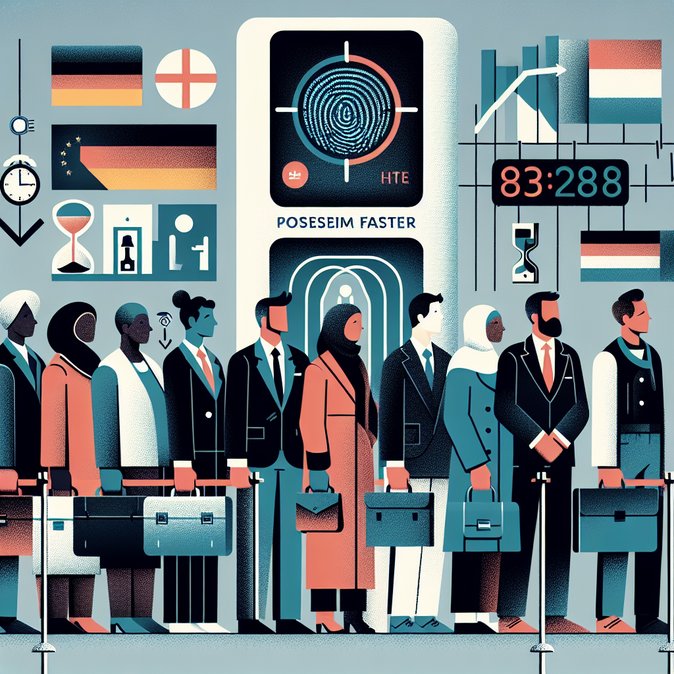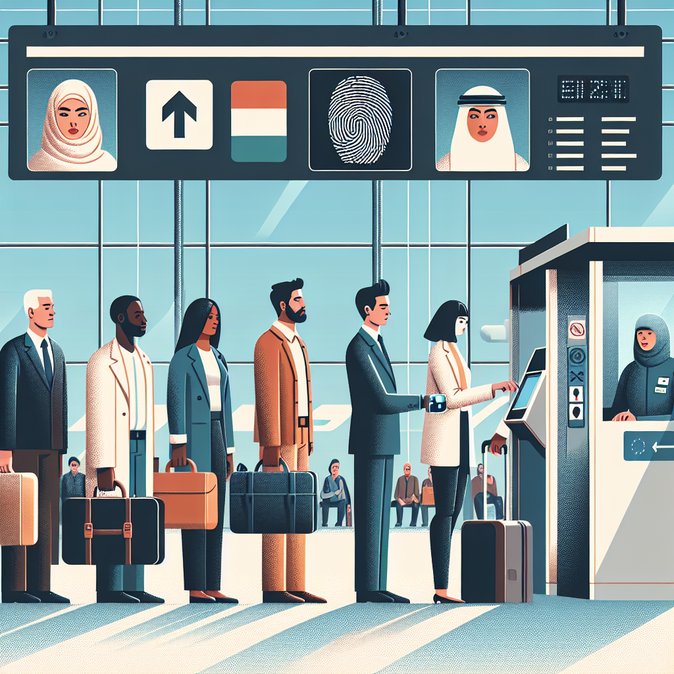
The European Union’s long-awaited Entry/Exit System (EES) became fully operational on Friday, 10 April, replacing manual passport stamps with biometric registration for every non-EU national entering or leaving the Schengen Area. The European Commission confirmed that all external border crossing points—Frankfurt, Munich, Berlin BER and seven other German airports included—are now connected to the central eu-LISA database. Under the new rules, first-time arrivals from visa-exempt countries must spend roughly 60–90 seconds at a self-service kiosk to have fingerprints and a facial image captured. Subsequent trips require only a quick identity verification, providing a theoretical time saving of 20–30 seconds per passenger once the system beds in. The Federal Police (Bundespolizei) has installed 420 kiosks and 160 upgraded e-gates across German airports to cope with the extra workload. Authorities and corporate mobility teams have been preparing for months: Lufthansa has added EES briefings to its automated check-in emails, while Siemens Mobility has rolled out an internal micro-course for employees who cross the external EU border more than twice a month. German Airports Association ADV expects initial teething problems, particularly during the summer peak when up to 50,000 non-EU travellers a day funnel through Frankfurt alone. Data protection remains a hot topic. The German Data Protection Conference (DSK) says biometric data will be stored for three years after exit; companies collecting passport copies for travel booking must ensure they do not retain the same data longer than necessary under GDPR. Carriers that fail to verify an EES record before boarding risk fines of up to €5,000 per passenger. With ETIAS (the separate electronic travel authorisation) still scheduled for late 2026, travel managers are advised to update pre-trip communications, ensure travellers build an extra 15 minutes into itinerary buffers at external borders, and keep an eye on airport-specific guidance as the system stabilises.
Source: European Commission