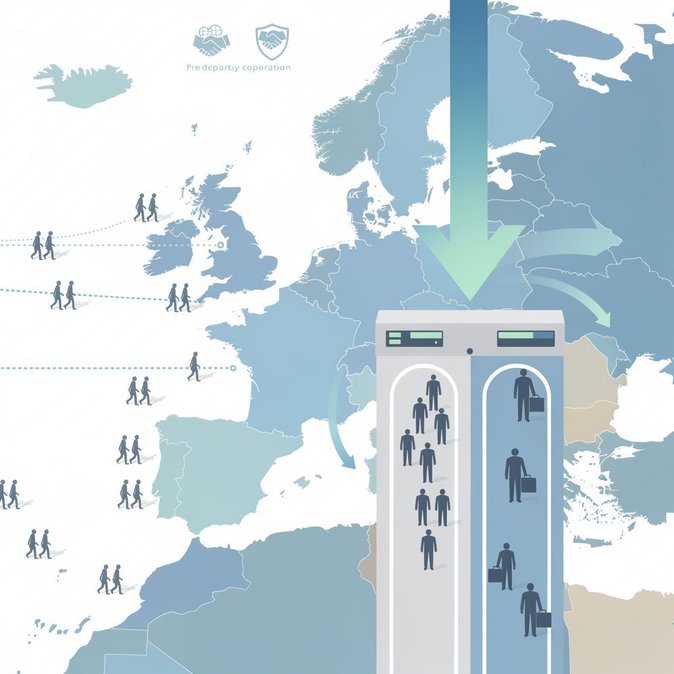
Pre-release figures from Frontex indicate that irregular entries into the European Union fell to 39 000 in the first five months of 2026—a 40 % decline year-on-year. The agency attributes the drop to upstream cooperation with departure countries and to the deterrent effect of the Migration Pact, which requires uniform screening and faster returns. For France, the busiest western-Mediterranean segments – the Basque and Catalan coasts – still saw a 46 % uptick, but this was offset by sharp falls on the West African route that feeds into Marseille. The Interior Ministry said the data justify redeploying maritime patrol assets from the Atlantic to the Mediterranean for the peak summer season. Airports may benefit as well: fewer irregular sea arrivals allow police aux frontières to reassign officers to EES booths, potentially easing bottlenecks for legitimate business travellers. The caveat is human: the International Organization for Migration says 1 300 people have died in the Mediterranean so far this year, underlining the need for safe-and-legal pathways such as France’s talent-passport scheme. Frontex Executive Director Hans Leijtens singled out the accelerated asylum track as a key innovation. French lawmakers supportive of the pact argue that quicker negative decisions will raise the currently low enforcement rate of removal orders – 17 % in France last year – and thereby restore credibility to the system. Employers sponsoring work permits should monitor whether tighter removals lead to stricter document verification at préfecture level.
Source: Anadolu Agency