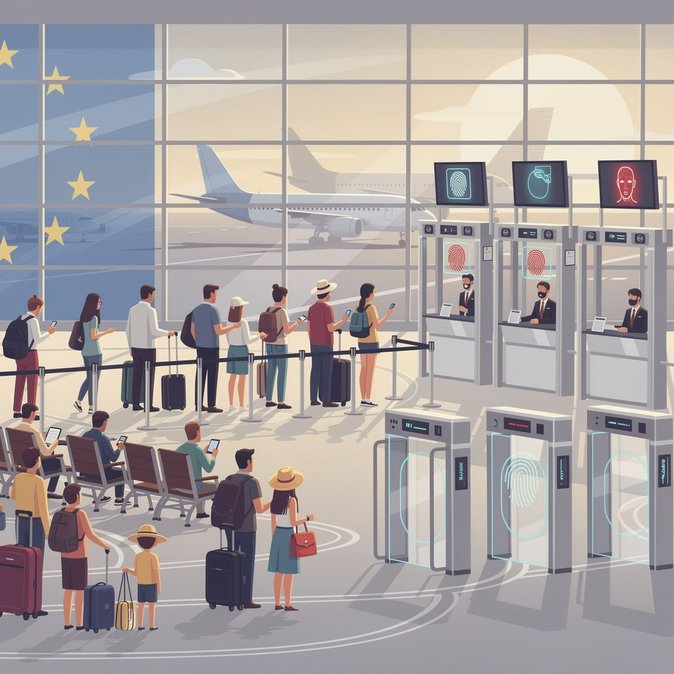
European airline bodies ACI Europe, Airlines 4 Europe and IATA on 1 July published a joint open letter warning that the EU’s new Entry/Exit System (EES) is creating queues of up to five hours at some border-control points. The Spanish airports of Madrid-Barajas, Tenerife Sur, Palma, Alicante and Málaga are listed among the worst affected. Carriers fear that the July–August peak—when Spain handles 40 million more travellers than in May–June—will overwhelm facilities that lack enough staffed booths and fully operational biometric kiosks. Under EES, third-country travellers must provide fingerprints and a facial image on first arrival, replacing passport stamps. Member states may already grant “limited flexibility” until 1 September, but industry groups say that is insufficient. They want the Commission to authorise preventive suspension of biometric capture whenever passenger volumes exceed capacity, and to create a permanent opt-out mechanism for future spikes. Brussels has called an urgent meeting with border authorities and the aviation sector “in the next days”. For mobility planners the stakes are high. Spain’s coastal gateways power the country’s tourism-led economy and act as hubs for multinational assignees shuttling between Europe, Africa and Latin America. Five-hour lines translate into missed connections, hotel over-stays and duty-of-care headaches. Companies are being advised to schedule arriving employees and project teams outside weekend peaks, allow at least four hours for international transfers and consider adding fast-track services to travel policies. Longer term, the dispute highlights a structural problem: airports that were designed for manual stamp-and-go processes now need space for biometric kiosks, self-service enrolment areas and holding pens for families. Even if Brussels agrees to a summer reprieve, airlines warn that a full roll-out in September could trigger the same chaos unless Spain accelerates hiring of Policía Nacional officers and installation of additional e-gates.
Source: Agencia EFE