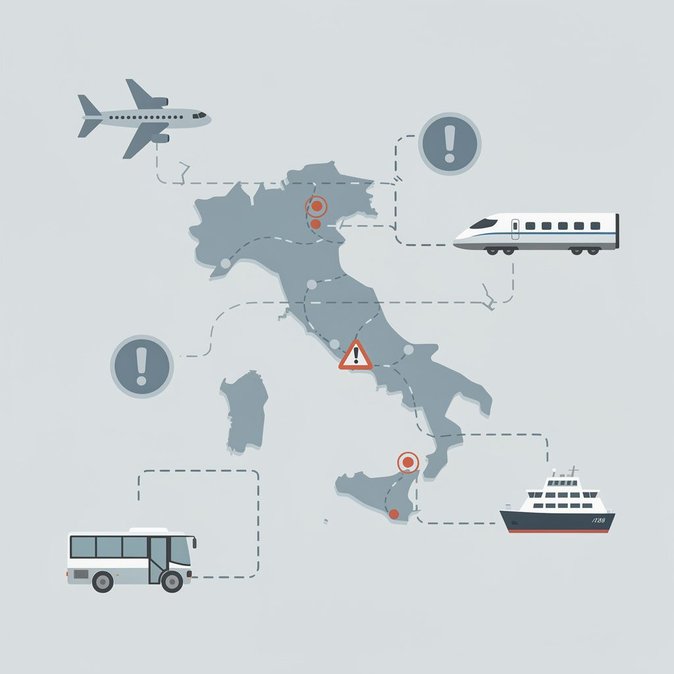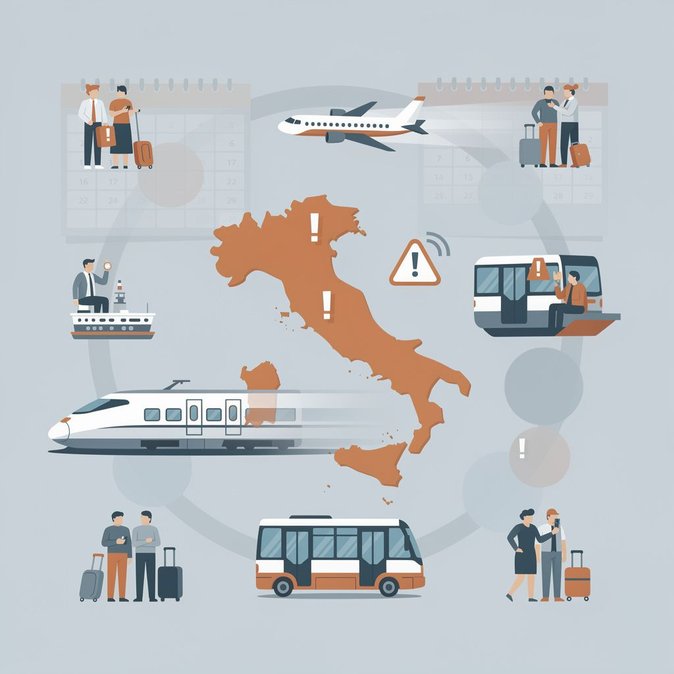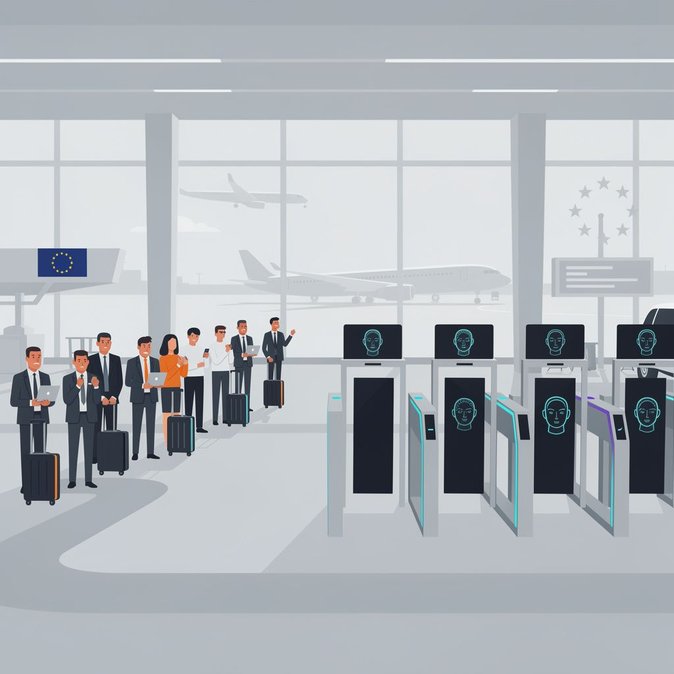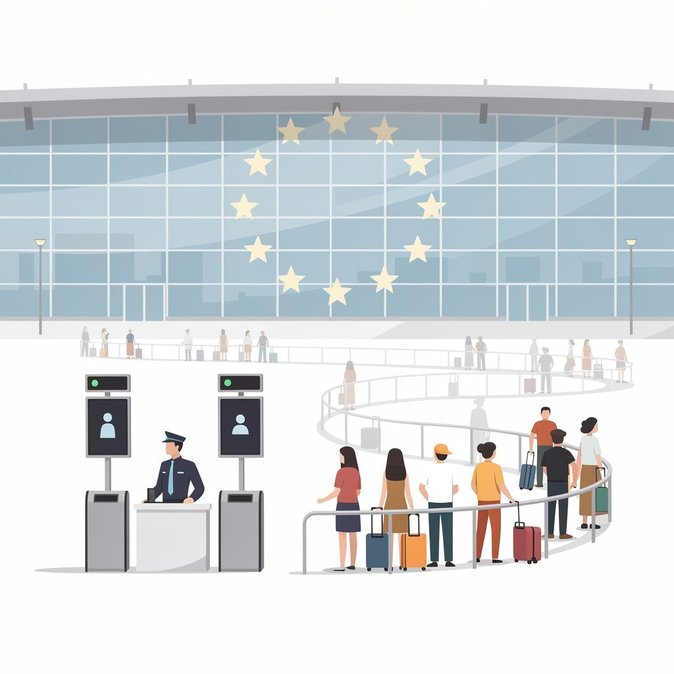
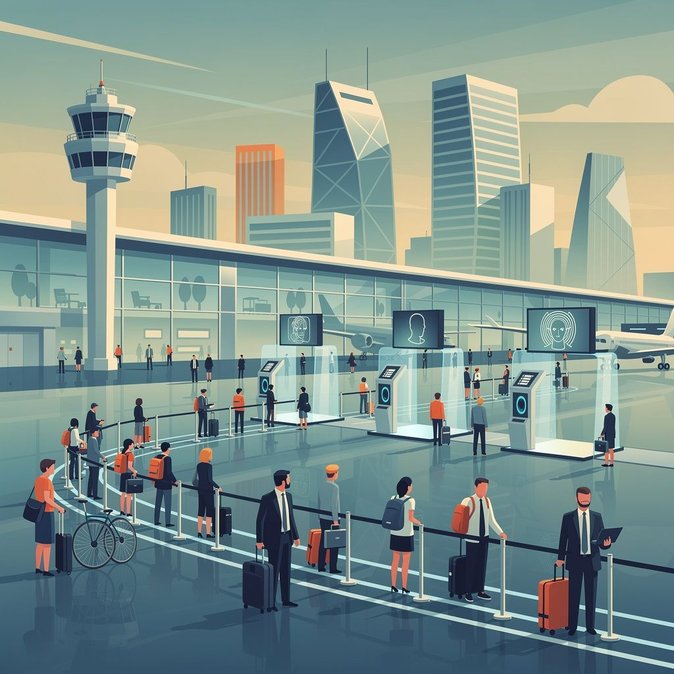
Europe’s three biggest aviation trade bodies – Airlines for Europe (A4E), Airports Council International (ACI Europe) and the International Air Transport Association (IATA) – have jointly asked European Commission president Ursula von der Leyen to let member-states switch off parts of the new Schengen Entry/Exit System (EES) during July and August. In an open letter, the groups say that at several hubs “flights are leaving half-empty while passengers are still stuck in five-hour border queues.” Italy is singled out as a flash-point. The CEO of Aeroporti di Roma warned last week that Fiumicino may have to halt biometric capture for non-EU nationals if extra kiosks and staff are not approved immediately. According to the industry letter, Rome’s peak-hour capacity has fallen by 28 % since the compulsory enrolment of fingerprints and face images began, despite recent terminal expansions.
If Brussels grants the requested flexibility, individual countries could invoke an “exceptional-volumes” clause allowing them to wave repeat travellers through manual lanes or postpone full biometric checks until September. That would mirror Greece’s temporary opt-out for UK tourists, introduced in May.
At a practical level, travelers and mobility managers can mitigate some of this uncertainty by working with VisaHQ. The company’s Italy-specific platform (https://www.visahq.com/italy/) offers expedited visa and passport services, live border-control alerts and concierge assistance that helps reroute or rebook when sudden EES bottlenecks arise, giving organizations extra resilience during the peak season.
![Airlines and Airports Seek Summer Suspension of EU Biometric Checks, Cite Rome’s ‘Disaster Risk’]()
Business impact: For Italian companies moving talent in or out of the country this summer, a Commission decision either way will dictate how much slack to build into travel day schedules. Duty-of-care teams should update risk assessments now: prolonged exposure to crowded, un-air-conditioned immigration halls has already led to medical incidents at Fiumicino and Milan Malpensa. Airlines operating corporate shuttles into Milan’s Linate may reroute wide-body connections there if Malpensa bottlenecks persist.
Strategic context: The plea underscores friction between the EU’s push for digital borders and industry fears of under-resourced rollout. Italy, home to the EU’s second-largest long-haul market after Spain, will be a test case for whether EES can cope with summer demand or needs phased adoption.
Next steps: The Commission is expected to respond before the Transport Council meeting on 8 July. Should no waiver be granted, Italian authorities may follow France in issuing unilateral suspensions – a move that could trigger infringement proceedings but may be politically palatable during the tourist season.
If Brussels grants the requested flexibility, individual countries could invoke an “exceptional-volumes” clause allowing them to wave repeat travellers through manual lanes or postpone full biometric checks until September. That would mirror Greece’s temporary opt-out for UK tourists, introduced in May.
At a practical level, travelers and mobility managers can mitigate some of this uncertainty by working with VisaHQ. The company’s Italy-specific platform (https://www.visahq.com/italy/) offers expedited visa and passport services, live border-control alerts and concierge assistance that helps reroute or rebook when sudden EES bottlenecks arise, giving organizations extra resilience during the peak season.
Business impact: For Italian companies moving talent in or out of the country this summer, a Commission decision either way will dictate how much slack to build into travel day schedules. Duty-of-care teams should update risk assessments now: prolonged exposure to crowded, un-air-conditioned immigration halls has already led to medical incidents at Fiumicino and Milan Malpensa. Airlines operating corporate shuttles into Milan’s Linate may reroute wide-body connections there if Malpensa bottlenecks persist.
Strategic context: The plea underscores friction between the EU’s push for digital borders and industry fears of under-resourced rollout. Italy, home to the EU’s second-largest long-haul market after Spain, will be a test case for whether EES can cope with summer demand or needs phased adoption.
Next steps: The Commission is expected to respond before the Transport Council meeting on 8 July. Should no waiver be granted, Italian authorities may follow France in issuing unilateral suspensions – a move that could trigger infringement proceedings but may be politically palatable during the tourist season.