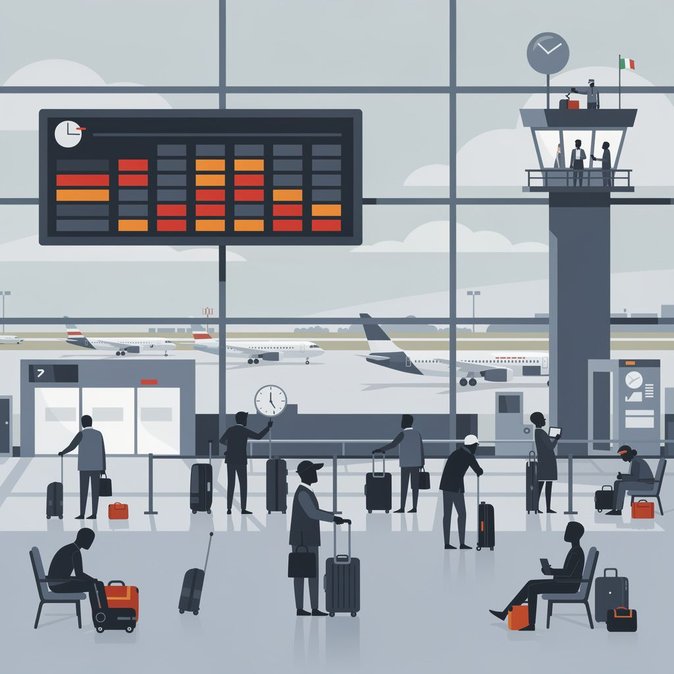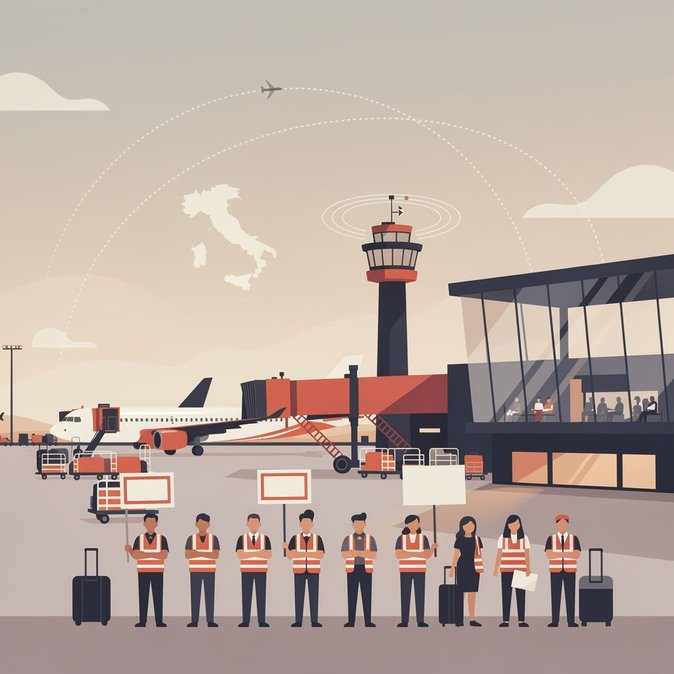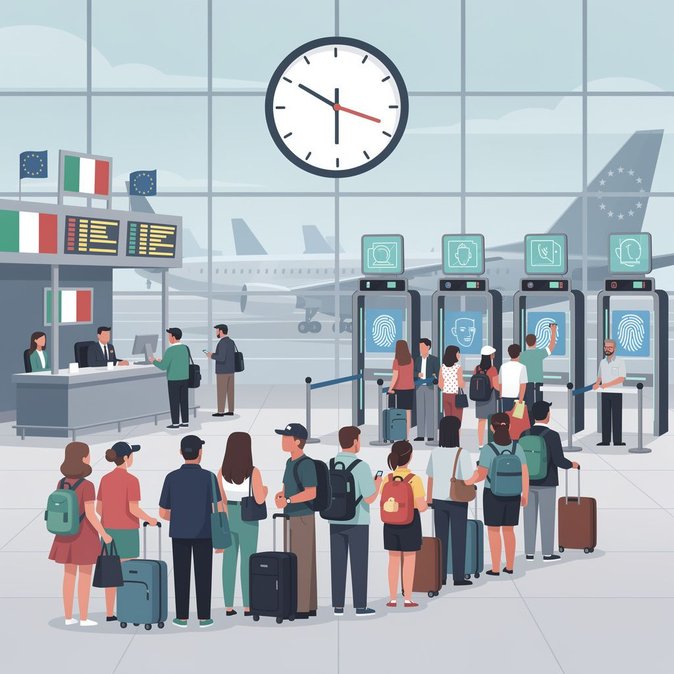
Assaeroporti and Aeroporti 2030, representing 41 Italian airports, have joined ACI Europe, IATA and Airlines for Europe in demanding an urgent pause—or at least greater flexibility—in the application of the EU’s new Entry/Exit System (EES) until 30 September. In a 3 July statement the associations warned that biometric kiosks introduced on 10 April are already pushing outbound wait times beyond 90 minutes at Rome-Fiumicino and Milan-Malpensa, with “unmanageable queues” forecast when leisure traffic peaks later this month. The EES records fingerprints and facial images for every non-EU traveller, replacing passport stamping and feeding a central Schengen database.
For travellers trying to navigate these evolving border controls, VisaHQ offers a helpful lifeline: its Italy-dedicated platform (https://www.visahq.com/italy/) monitors regulatory changes in real time and provides expedited visa processing, document checks and personalised alerts, reducing the risk of unexpected delays when the EES queues lengthen.
While airports support the security objective, they say staffing and equipment budgets were predicated on pre-pandemic volumes, not the 15 % passenger surge Italy is now experiencing. Polizia di Frontiera has redeployed officers from smaller checkpoints, yet saturation remains common in the early-morning bank of U.K. and U.S. departures. Assaeroporti president Carlo Borgomeo called the temporary suspension “an act of common sense,” arguing that the Commission already allowed similar derogations during the 2024 Paris Olympics. He warned that airlines will otherwise have to block seats to meet 25-second-per-passenger targets, costing the Italian economy up to €220 million in lost tourism receipts. Multinational firms relocating staff through Italy should build extra buffer time into itineraries and watch for possible pop-up EES lanes: Florentine Amerigo Vespucci Airport has begun segregating ETIAS-exempt business passengers to speed throughput. The Commission is expected to respond before the 10 July Justice and Home Affairs Council; insiders hint that a “targeted suspension mechanism” linked to real-time queue data is under discussion.
For travellers trying to navigate these evolving border controls, VisaHQ offers a helpful lifeline: its Italy-dedicated platform (https://www.visahq.com/italy/) monitors regulatory changes in real time and provides expedited visa processing, document checks and personalised alerts, reducing the risk of unexpected delays when the EES queues lengthen.
While airports support the security objective, they say staffing and equipment budgets were predicated on pre-pandemic volumes, not the 15 % passenger surge Italy is now experiencing. Polizia di Frontiera has redeployed officers from smaller checkpoints, yet saturation remains common in the early-morning bank of U.K. and U.S. departures. Assaeroporti president Carlo Borgomeo called the temporary suspension “an act of common sense,” arguing that the Commission already allowed similar derogations during the 2024 Paris Olympics. He warned that airlines will otherwise have to block seats to meet 25-second-per-passenger targets, costing the Italian economy up to €220 million in lost tourism receipts. Multinational firms relocating staff through Italy should build extra buffer time into itineraries and watch for possible pop-up EES lanes: Florentine Amerigo Vespucci Airport has begun segregating ETIAS-exempt business passengers to speed throughput. The Commission is expected to respond before the 10 July Justice and Home Affairs Council; insiders hint that a “targeted suspension mechanism” linked to real-time queue data is under discussion.