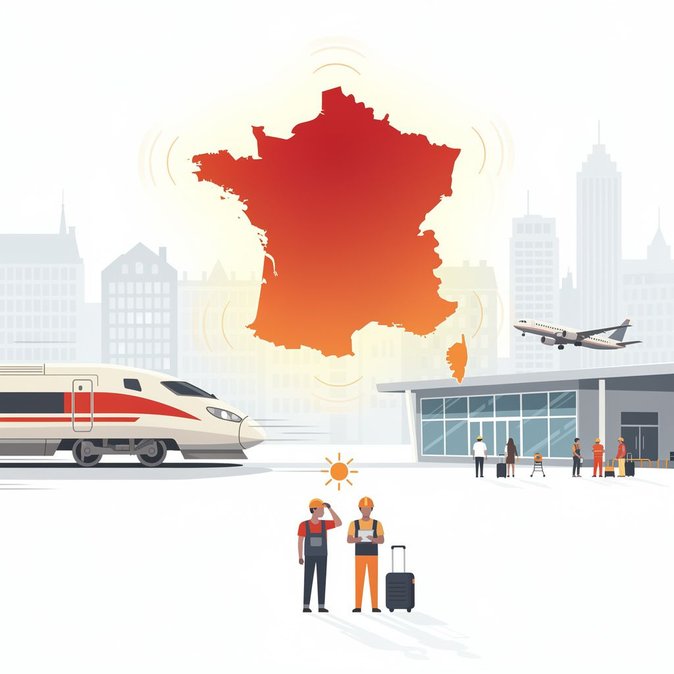
A study released 10 July by Transdev’s analytics unit, using anonymised Orange Flux Vision mobile-signal data, reveals that French residents curtailed movements by up to 9 % during the second heatwave of 2026. Urban centres such as Paris, Lyon and Bordeaux saw the steepest declines, while coastal and alpine communes recorded spikes above 10 % as people sought cooler climates. For corporate mobility planners, the data confirm anecdotal reports of increased remote working and adjusted business-travel patterns when red alerts are issued. Modal shifts were also observed: bike-share usage dropped 15 %, whereas air-conditioned car-share rides rose 12 %. Rail trip-planning searches fell 8 % on SNCF Connect during peak-heat days, despite high seasonal demand. The analysis recommends that employers integrate heat-alert thresholds into travel-authorisation systems, allowing automatic deferral of non-essential trips. Facilities managers should also consider flexible office cooling allowances, as mobility reduction is partly driven by workers avoiding under-air-conditioned buildings. The findings lend weight to calls from labour unions for a formal ‘droit de retrait climatique’ permitting employees to refuse travel when national heat plans reach level 4.
Source: Le Monde (Economy section)