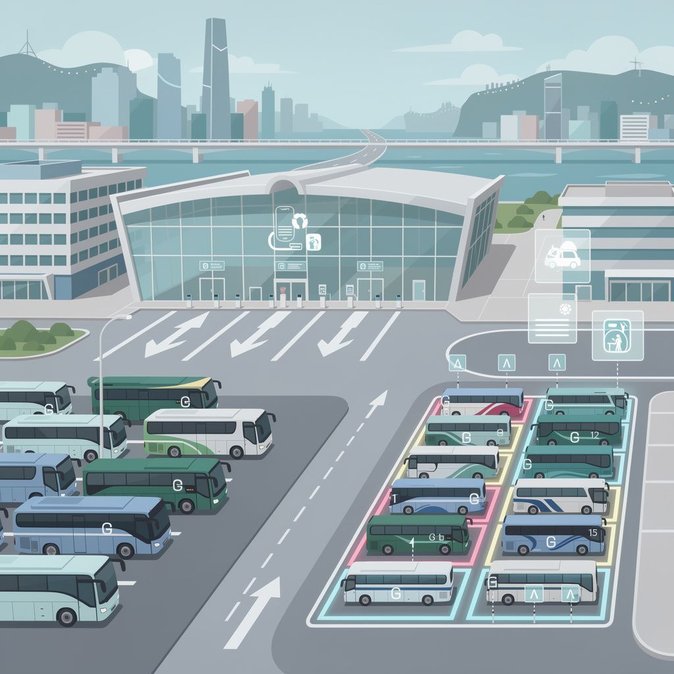
Hours after the government tabled the Huanggang Port bill, transport-sector voices called for stronger public education and ground-transport planning at the soon-to-open checkpoint. Legislative Council member Edward Leung and Non-Franchised Bus Association chairman Eddie Choi told reporters on 16 July that many residents still confuse the upgraded Huanggang Port with neighbouring Lok Ma Chau and Futian crossings. Without clear signage, real-time traffic apps and multilingual briefings, first-time users could face congestion when the 24-hour facility goes live. Coach operators are particularly concerned about parking. The current design provides just 130 bays for cross-border coaches—40 fewer than the temporary hall—but daily coach demand could exceed 300 during peak weekends. Choi urged authorities to convert adjacent land into overflow bays and introduce electronic slot-booking similar to the airport’s “Park & Fly” system. From a mobility-management standpoint, reliable ground transport is vital for corporates that run staff shuttles between Hong Kong offices and Shenzhen tech parks. Any bottleneck could offset the time savings promised by one-stop immigration. Employers should monitor Transport Department circulars for final traffic-lane allocations and advise employees to use QR-code ticketing to shorten boarding times. Government sources say a publicity blitz—including MTR adverts, WeChat mini-apps and tutorial videos—will launch next week. They also confirmed talks with bus associations on dynamic bay assignment and GPS-based queuing to smooth flows. Still, HR teams should anticipate teething issues in August and keep alternative routes via the Shenzhen Bay Bridge as contingency. Bottom line: the new port’s efficiency hinges not only on e-gates but on last-mile connectivity. Early engagement with transport providers can help firms lock in guaranteed coach slots during the critical first 90 days post-launch.
Source: South China Morning Post