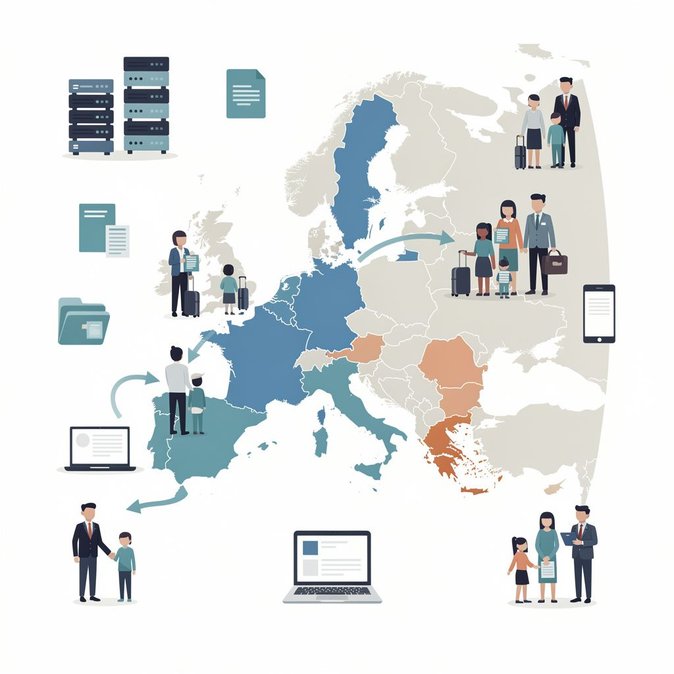
Less than five weeks after the EU Pact on Migration and Asylum entered into force, the European Commission published its first assessment of how the bloc’s brand-new responsibility rules are working in practice. Released on 16 July 2026, the review looks at the period 12 June – 3 July and focuses on Member States already under migratory pressure and those benefiting from solidarity transfers. For Finland, which formally began applying the Pact on 12 June, the document is an important temperature-check. Although the assessment highlights Cyprus, Spain, Greece and Italy, it also confirms that all Member States must now have the technical capacity to carry out swift “responsibility transfers” – the logistical hand-over of an asylum applicant to the country deemed responsible for examining the claim. Finland’s Interior Ministry has acknowledged that the new rules will require closer day-to-day coordination with Sweden, Estonia and other Nordic-Baltic partners to ensure that registration data are uploaded correctly into Eurodac and that transfer deadlines (generally 12 weeks) are met. Background: Under the Pact, the old Dublin system is replaced by more detailed criteria for deciding which country must process an application, while a solidarity mechanism obliges other Member States either to accept relocations or to make financial and operational contributions. The Commission notes “considerable progress” on implementation but flags that actual physical transfers are still slow. Nordic capitals are watching this closely: Helsinki in particular fears that if frontline countries struggle, northern hubs could face sudden transfer requests with little warning. Business implications: Employers moving staff across EU borders need to prepare for faster, more automated status checks when posting non-EU nationals. Carriers operating charter services (e.g., seasonal agricultural flights) will also have to verify that passengers’ biometric data have been captured at first entry, or risk penalties. Multinational companies should review compliance processes for intra-EU postings, especially where family dependants will apply for protection. Practical advice: • HR teams should monitor updates from the Finnish Immigration Service (Migri) on transfer procedures and time-lines. • Companies planning to relocate staff from Mediterranean Member States to Finland should factor in the possibility of a transfer request being issued if an employee claims asylum elsewhere first. • Travel managers should brief travellers on the likelihood of longer waits at some Schengen external borders as responsibility checks become fully operational. The next Commission assessment is due in October 2026, giving businesses a three-month window to adapt internal mobility policies before the EU tightens its compliance audits.