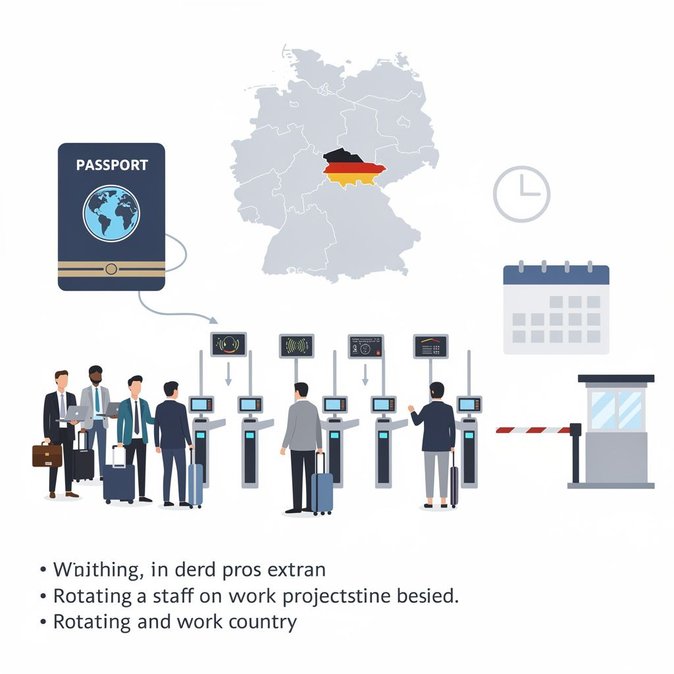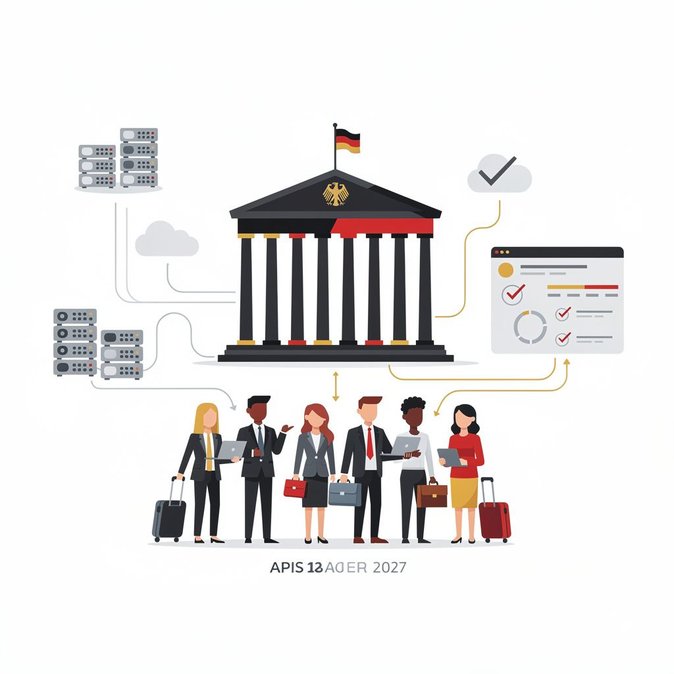
Germany’s Federal Government published a far-reaching reform package on 22 July 2026 that promises to make doing business—and moving talent—considerably easier. The “Reforms for the Future of Our Country” programme pledges to cut €10 billion in administrative costs per year by streamlining reporting requirements, shortening permit procedures and shifting more services online. Although presented as a broad economic modernisation agenda, the document singles out residence, work-permit and citizenship procedures as priority areas for full end-to-end digitalisation. According to the Chancellery, the first concrete deliverable will be a single federal portal that lets employers, relocation providers and applicants track Skilled-Worker visas, EU Blue Cards and family-reunification permits in real time. Interfaces to the Federal Employment Agency (BA) and the Ausländerbehörden are to be completed by Q4 2027, with API access for corporate mobility teams planned for 2028. The government also wants to expand the fast-track (§81a AufenthG) procedure beyond the current pilot Länder, reducing total processing time to “well under eight weeks.” For global-mobility managers the headline is speed. Today, German work visas often require separate submissions to the BA, the local foreigners authority and the overseas mission—each with its own queue. The proposed ‘one-stop account’ would consolidate those steps, pre-populate forms with company data already held by other agencies, and issue digital entry permits that airlines can verify via IATA’s Timatic database. Officials say the model borrows heavily from Denmark’s SIRI portal and will be accompanied by legislative changes allowing electronic seals instead of wet signatures. The package also tackles labour-market bottlenecks that drive inbound mobility. A €500 billion infrastructure and climate fund will bankroll green-tech projects that depend on international engineers, while a separate €30 billion Germany Fund will co-invest with Mittelstand firms that commit to recruiting abroad. Tax measures—such as a higher commuter allowance and an employee lump-sum deduction—aim to make cross-border assignments more attractive for both employers and assignees. In practical terms, companies should prepare for a transitional phase in which old and new processes run in parallel. Mobility teams are advised to audit their document workflows, identify data that can be reused across authorities, and budget for system integrations once the government publishes its API specifications next year. When fully implemented, the reforms could give Germany one of Europe’s most corporate-friendly immigration regimes—provided the IT build-out stays on schedule.