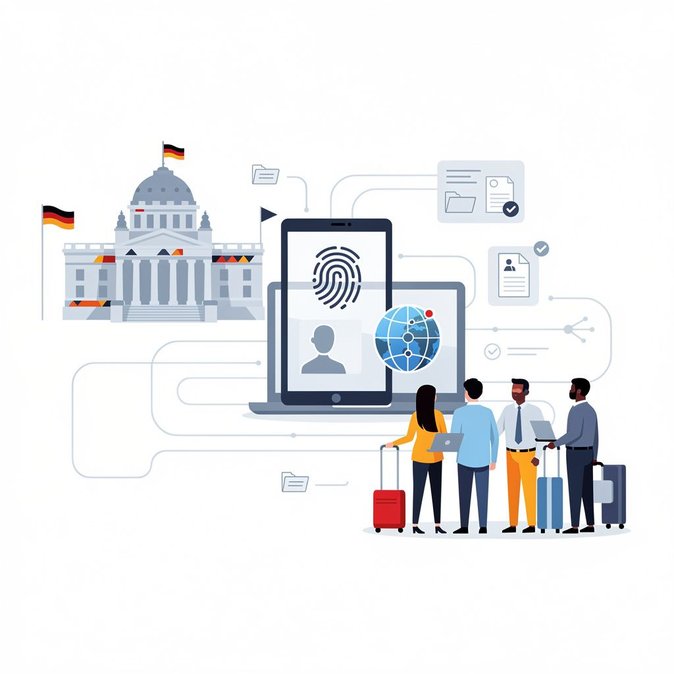
Berlin’s Bundestag used its final summer sitting on 20 July 2026 to adopt the “Migrationsverwaltungs-digitalisierungs-weiterentwicklungsgesetz”, a mouth-filling title for a law that could quietly transform day-to-day mobility compliance in Germany. The package, which sailed through the chamber on a cross-party vote, gives immigration, visa and border agencies a single legal basis to collect, store and reuse biometric data (photo, fingerprints, signature) that are already captured when foreign nationals apply for an electronic residence permit inside Germany. Until now each new application—whether for a Blue Card renewal, a change of status or a permanent-residence upgrade—triggered another in-person appointment and another set of fingerprints. The reform means one high-quality data set can follow the applicant through the system, saving weeks of waiting time and thousands of man-hours for regional foreigners’ authorities. Just as important for employers, the law forces the various actors in the visa chain—German missions abroad, the Federal Foreign Office’s visa unit, the Federal Office for Migration and Refugees (BAMF) and local Ausländerbehörden—to share application documents electronically. Corporate mobility managers have long complained that original employment contracts, degrees and apostilled translations physically travel back and forth between offices, holding up start dates. By mandating nationwide digital access to “visa-relevant supporting documents”, the government expects to cut processing times for work and ICT visas by up to 30 %, according to the Interior Ministry’s impact assessment. A further chapter amends the Ausländerzentralregister (AZR), Germany’s central foreigners’ database, so that information about restrictions on social-security benefits is written directly into the person’s electronic file. That should give job centres and welfare authorities immediate clarity over which benefits a migrant is—or is not—entitled to, reducing paperwork and the risk of over-payments. The same AZR upgrade will allow prosecutors and courts to feed criminal-case outcomes straight to immigration officials rather than via postal mail, a step officials say will strengthen public-security vetting without creating new reporting duties for companies. For businesses the most tangible win is speed. Multinational employers relocating staff to Germany can now reuse biometric data already on file, book fewer appointments and track application progress in real time once consulates and local authorities are linked up. Start-ups in Berlin and Munich, which rely heavily on third-country tech talent, welcomed the change; the German Start-up Association called it “the difference between losing and landing a candidate”. Global mobility providers, meanwhile, urge HR teams to audit their onboarding checklists because some legacy steps—collecting fresh fingerprints, printing multiple certified copies—will become obsolete once the law enters into force early next year. The digitalisation act forms part of the coalition government’s wider skilled-migration strategy, which introduced an “Opportunity Card” points system in 2024 and lowered salary thresholds for the EU Blue Card. Taken together, Berlin hopes the reforms will help close a still-acute shortage of some 400,000 skilled workers a year and keep Germany competitive for foreign investment.
Source: Deutscher Bundestag (hib)