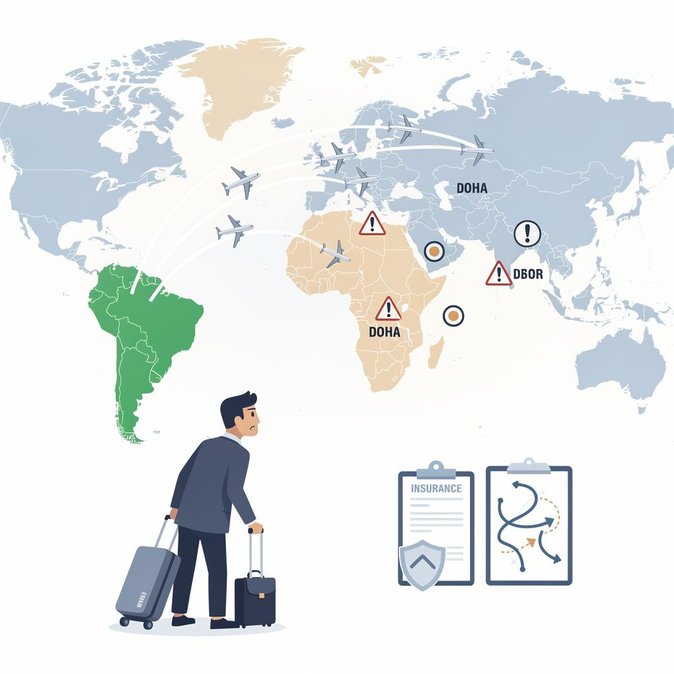
With the United States raising tariff walls against Brazilian exports this week, Brasília is doubling-down on multilateralism. On 22 July the Federal Senate confirmed 16 international treaties approved during the first half of 2026—more than in the same period of 2024 and 2025 combined. The package ranges from the long-awaited Mercosur-EU accord, to open-skies style air-services arrangements with Qatar, and free-trade agreements with EFTA and Singapore. Lawmakers and the foreign-affairs committee (CRE) argue that expanding Brazil’s web of agreements is the best antidote to rising economic protectionism abroad. For global mobility professionals the measures go far beyond tariffs. The Mercosur-EU deal, in force since 1 May, embeds mutual recognition of professional qualifications and creates a consultative body on business-visa irritants—key for executives who shuttle between São Paulo, Frankfurt and Paris. The EFTA pact makes 99 % of Brazilian agricultural and industrial exports enter Switzerland, Norway, Iceland and Liechtenstein duty-free, and obliges members to streamline work-permit processing within two years. Meanwhile, the Singapore agreement will phase-out 95 % of tariffs and introduces a 90-day, multi-entry business-visa waiver for Mercosur citizens. Aviation mobility also features prominently. A bilateral with Qatar (approved under PDL 163/2023) liberalises passenger and cargo traffic, removes frequency caps and lets carriers choose any intermediate points. Qatar Airways has already announced a triangular Doha–Caracas–Bogotá service beginning 22 July 2026 and hinted at a second South-American destination via São Paulo once slots become available. Easier fifth-freedom rights promise new one-stop options for Brazilian business travellers heading to the Middle East and Asia. Brazilian companies expect tangible HR benefits. “European investors can now deploy technicians on short notice under the service-supplier chapter, while our engineers will gain facilitated entry to EU plants for on-the-job training,” says Claudia Ribeiro, mobility manager at an agritech firm in Mato Grosso. HR departments should, however, watch implementation deadlines: many work-visa simplifications will only kick-in after each partner issues secondary regulations, likely staggered between 2026 and 2028. Practically, mobility teams should audit assignment policies now. Cost projections may change as customs duties disappear and new 90-day visa-free stays become possible, limiting the need for more expensive temporary-work visas. Companies that rely on Qatar Airways’ São Paulo hub should prepare travellers for new routings once Bogotá and Caracas come online and factor in possible schedule changes during the Northern-hemisphere winter. Overall, the Senate’s approvals mark the biggest single-day advance for Brazil’s outward mobility framework in a decade.
Source: Agência Senado