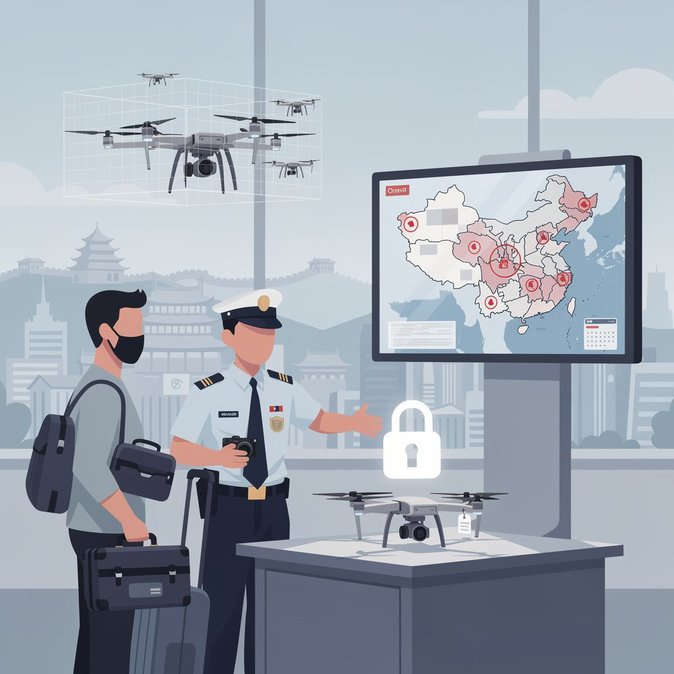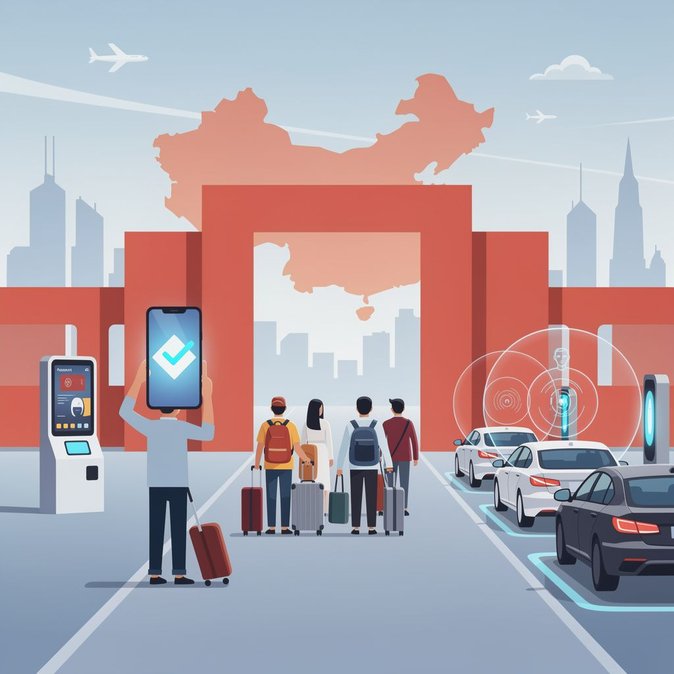
Speaking at a State Council press conference on 24 July, Vice-Minister of Public Security Qi Yanjun revealed that 22.91 million foreign nationals entered mainland China in the first half of 2026, a year-on-year rise of 20.4 %. Of these, 17.82 million—fully 77.7 %—arrived under China’s expanding visa-free and transit-without-visa (TWOV) programmes. The data confirm that Beijing’s unilateral 30-day visa-waiver scheme—now covering 50 countries including Canada and the UK—continues to stimulate business and leisure demand. South Korea, Russia, Malaysia, Vietnam and Thailand were the top five source markets, underscoring the importance of short-haul Asian connectivity. Immigration officials processed 369 million cross-border passenger movements overall, a record for any January-June period. Qi highlighted several policy experiments aimed at further improving mobility: electronic border-zone permits went live nationwide in April; seven provinces are piloting app-based lodging registration for foreigners in non-hotel accommodation; and facial-plus-iris “one-stop” vehicle lanes have been deployed at selected Hong Kong–Shenzhen crossings. These digital upgrades are designed to support the government’s “Internet + Immigration” agenda, under which more than 95 % of exit-entry services should be paperless by 2030. For global mobility teams, the figures matter in three ways. First, they indicate reduced lead times for China travel—visa-free entry now accounts for the vast majority of visits. Second, they suggest that airport queues this autumn could be longer than at any point since 2019, making fast-track services in Shanghai or Beijing airports worth the fee. Third, they show regulators remain focused on compliance: foreigners must still register their address within 24 hours, but the new online tools make this far easier. Looking ahead, officials hinted that additional European and ASEAN countries might be added to the 30-day waiver list “based on reciprocity”. Businesses should keep template invitation letters on file in case bilateral talks stall and visas need to be re-introduced on short notice.
Source: Yicai Global