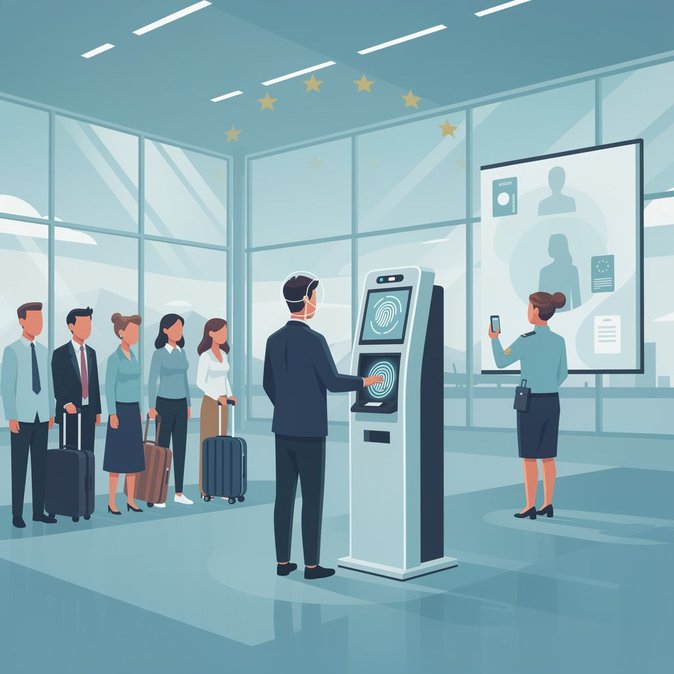
The European Commission confirmed on 27 July 2026 that the long-planned Entry/Exit System (EES) is now fully operational at all external Schengen border crossing points, including Finland’s land borders, ports and airports. Since its 10 April launch the biometric system has logged more than 145 million crossings, replacing the manual passport-stamping process for non-EU short-stay visitors. In Finland the EES applies at Helsinki-Vantaa Airport, Turku and Tampere airports, all ferry terminals handling traffic from the UK and third-country cruise ships, plus the reopened land crossing at Kilpisjärvi on the Norwegian border. It does not yet apply on the currently closed frontier with Russia. Travellers now have their fingerprints and facial image captured on first entry and are automatically checked out on departure; the system instantly flags overstayers or re-entry attempts before the 90/180-day allowance resets. The Commission reminder emphasised categories that are exempt: holders of Finnish (or other Schengen) residence permits or long-stay visas, close family members of EU/EEA citizens holding residence cards, and nationals of micro-states such as Monaco and San Marino. These travellers will still have their passports scanned but are not enrolled biometrically, which should marginally speed queues for international assignees resident in Finland. For mobility teams the practical impact is twofold. First, overstays will now be detected with certainty, so companies sending contractors on rotational shifts must track days in country precisely. Second, the initial enrolment adds around 30–45 seconds per traveller; Helsinki Airport border police report that queues at peak periods have grown by up to ten minutes on UK and US arrival banks. Employers should adjust connection buffers accordingly. Looking ahead, Finland plans to connect EES data to its digital residence-permit system in 2027, potentially allowing automated e-gates for permit-holders.