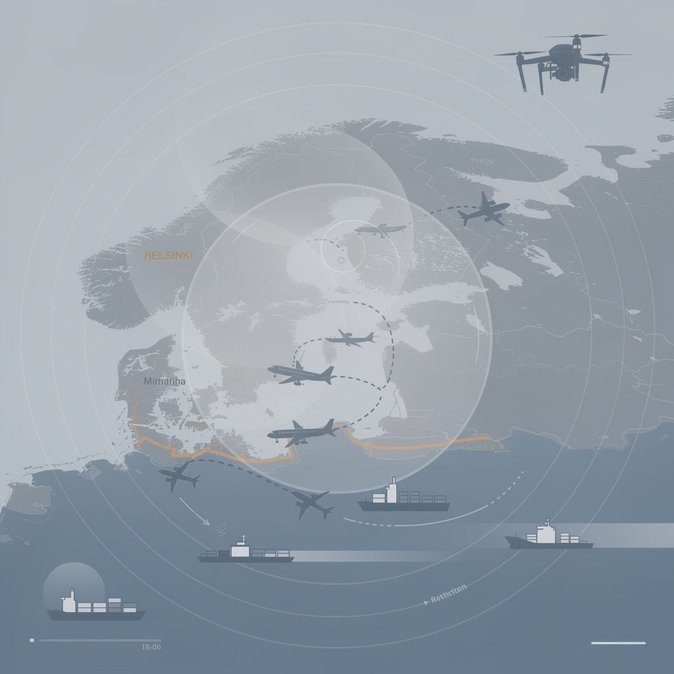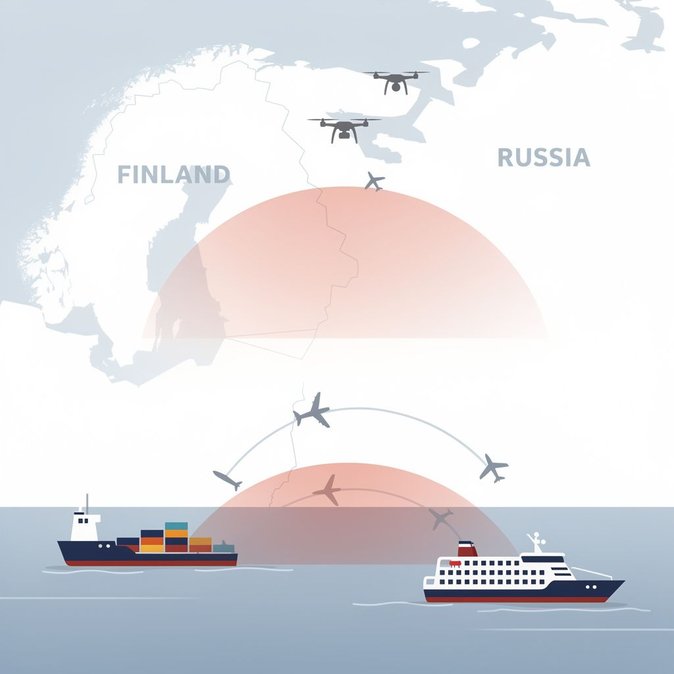
Finland’s Defence Forces imposed an emergency four-hour closure of a section of airspace and adjacent territorial waters off the south-eastern coast during the early hours of 28 July 2026 after radar and intelligence reports suggested that unmanned aerial vehicles operating over Russia might stray into Finnish territory. The restricted zone stretched from the port city of Kotka eastwards towards Hamina, an area less than 40 km from the Russian frontier that lies on one of the busiest shipping approaches to Helsinki. According to a Defence Forces spokesperson, the measure was “purely precautionary” and designed to give the military room to jam, intercept or, if necessary, shoot down drones without endangering civilian traffic. Similar short-notice closures were ordered twice earlier in July after Ukrainian long-range drones targeting Russian fuel depots veered off course, apparently because of Russian GPS-jamming. Although the incursion risk is judged low, Finland—NATO’s newest member—has invested heavily in counter-UAS radars and electronic-warfare kits since joining the alliance in 2024. Commercial aviation was the most immediately affected. Finnair re-routed four early-morning European departures via Swedish airspace, adding 10-15 minutes to flight times, while several cargo vessels were instructed to reduce speed outside the Gulf of Finland Traffic Separation Scheme. Helsinki-Vantaa Airport remained fully operational; the affected airspace is controlled from the separate Kotka Approach sector, meaning major international flights were unaffected. For global mobility managers the incident is a reminder that geopolitical spill-over from the Ukraine conflict can disrupt Nordic travel with little notice. Companies moving staff or goods through southern Finland should ensure they are enrolled in airline disruption-alert services, and that drivers possess multiple Schengen-wide routing options. The Defence Forces indicated that future closures could come with as little as 30 minutes’ warning, underscoring the importance of real-time travel tracking tools for duty-of-care compliance.
Source: Devdiscourse