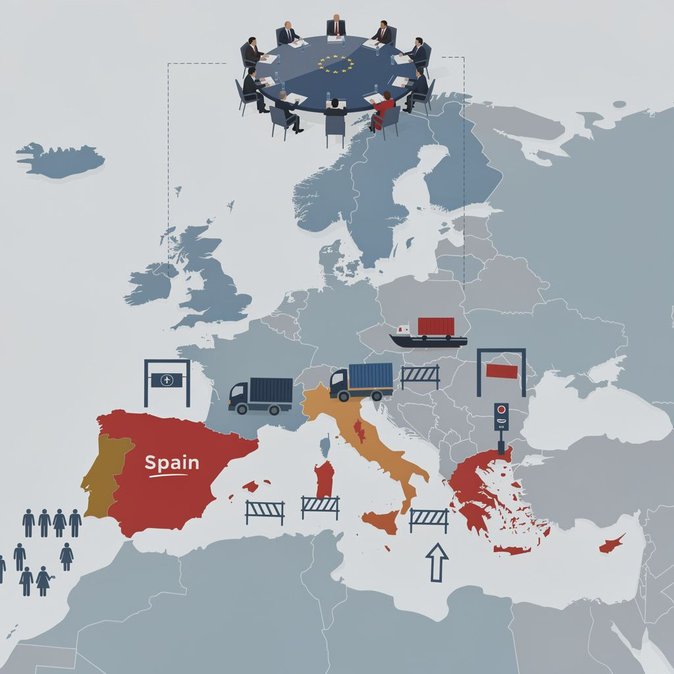
Facing a growing chorus of criticism from conservative governments across Europe, Spanish Prime Minister Pedro Sánchez has written to European Council President António Costa requesting an extraordinary meeting of interior ministers on Tuesday, 4 August. The move comes after Italy, Finland and several Eastern European states suggested suspending Schengen arrangements with Spain and linking future EU funds to stricter border management. According to a leaked copy of the letter seen by El País, Sánchez accuses partners of ‘egoism, prejudice and misinformation’ and insists that Spain’s April-approved extraordinary regularisation programme is unrelated to the Ceuta events. He warns that unilateral border closures threaten the integrity of the single market, citing potential supply-chain disruptions in automotive and agrifood sectors that rely on just-in-time truck traffic across Spain to the rest of Europe. For businesses, the political stand-off raises the prospect of ad-hoc checks spreading beyond Italy to France and even Portugal, jeopardising road haulage timetables and increasing compliance burdens for posted workers. Mobility teams should prepare contingency routing plans and review A1 certificate validity in case temporary re-introductions of controls extend inland. Analysts note that Spain holds a blocking minority in the Council, giving Sánchez leverage to demand EU-level funding for additional Frontex deployments around Ceuta and Melilla in exchange for dropping threats of legal action. The coming week will therefore be pivotal for companies deciding whether to postpone relocations or large-scale events involving cross-border travel. The wider debate also underscores ideological divisions on migration within the EU—divisions that, if left unresolved, could lead to a patchwork of temporary borders and further complicate the post-pandemic rebound in corporate mobility.
Source: El País