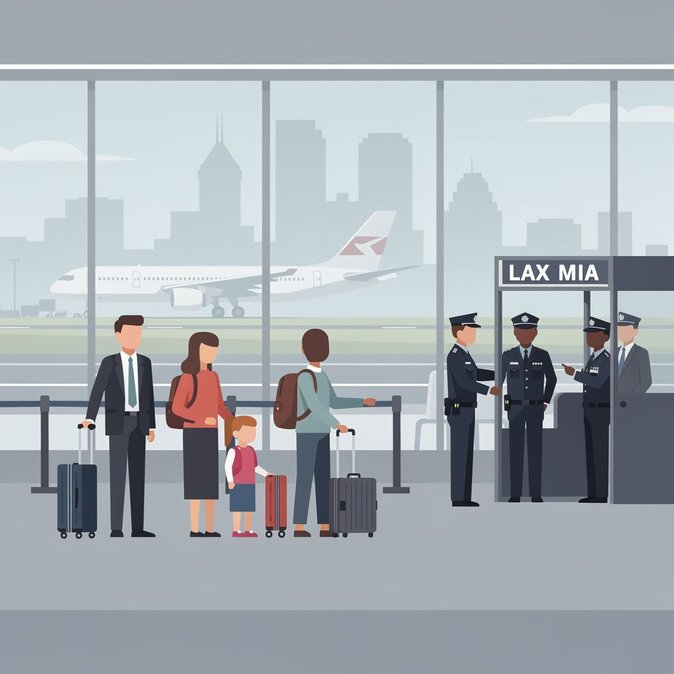
A new NBC News investigation published Monday evening reveals that Immigration and Customs Enforcement (ICE) officers are conducting a sharply higher number of arrests inside U.S. airports, a tactic the agency previously used only sparingly. According to internal data obtained by NBC, airport-based apprehensions rose 62 percent year-over-year in the first half of FY 2026, with the biggest spikes at Los Angeles International (LAX), Miami International (MIA), and New York’s John F. Kennedy (JFK). The arrests target non-citizens with outstanding final-removal orders or serious criminal warrants, but civil-rights groups argue that the sweep has also netted travelers whose only violations are civil immigration overstays. ICE’s Air Operations Division denies a change in policy, saying the increase reflects “better data sharing” with U.S. Customs and Border Protection (CBP) and local law enforcement. Nonetheless, attorneys report a growing number of calls from family members whose relatives were taken into custody while boarding or after landing on domestic connecting flights. For business travelers, the development raises new compliance and reputational risks. Executives on valid visas but with minor status-violation issues—such as lapsed address-change filings—could find themselves questioned or delayed. Companies are therefore advised to audit employees’ I-94 records, ensure timely visa renewals, and brief frequent travelers on what to expect if approached by ICE inside the secure area of an airport. Employers should also have counsel on call; detained travelers typically have only minutes to make a phone call before being transferred to an off-site facility. The surge is already drawing political attention. Senate Judiciary Committee ranking member Alex Padilla (D-CA) has requested a DHS Inspector General review, citing potential violations of the agency’s own “Sensitive Locations” policy, which historically limited enforcement in transportation hubs. If Congress presses DHS for answers, new guidance could follow—either reaffirming aggressive tactics or re-imposing guardrails that had been loosened quietly over the past year. Until then, global-mobility teams should treat U.S. airports as active enforcement zones and revisit their traveler-support protocols accordingly. Travel managers may also wish to update travel-risk assessments and consider adding “know-your-rights” briefings to pre-trip checklists, especially for employees who hold dual citizenship, have pending immigration applications, or travel with advanced parole documents.