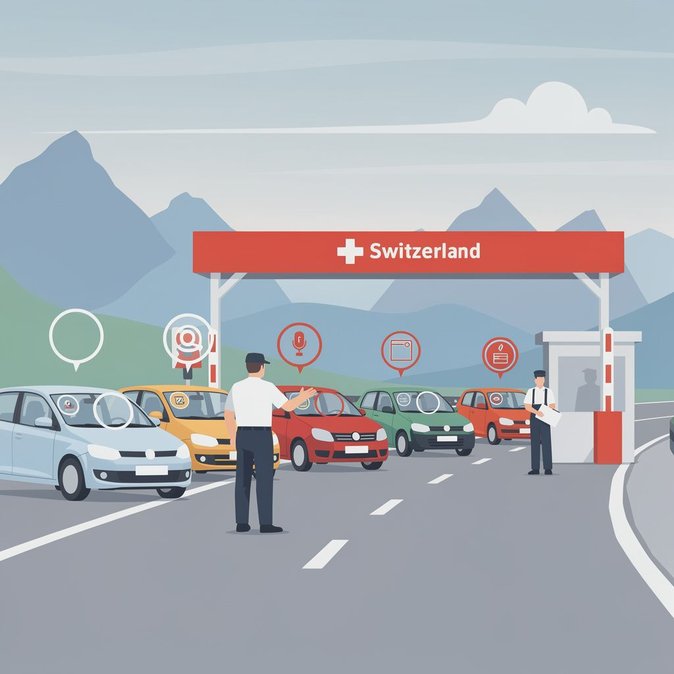
Switzerland has asked Brussels for a further reprieve before it begins systematically fingerprinting and photographing non-EU travellers under the Schengen Entry/Exit System (EES). In a letter circulated ahead of Monday’s Council ‘Visa Working Party’, Bern joined France, Greece, Portugal, Italy, Germany, Malta, the Netherlands and Belgium in requesting an extension, arguing that several regional airports and busy land crossings were still not technically ready. The EES, adopted in 2017 and officially launched last October, replaces the manual passport-stamp with an electronic register of every entry and exit by a third-country national. Border guards must capture four fingerprints and a facial image on a first visit; the data are stored for three years or until the passport expires. EU sources told The Guardian that more than 200 million registrations have already been made and 70 000 travellers refused entry since April, but a “handful” of airports across the nine requesting states cannot yet process peak-hour volumes without excessive queuing. Swiss airports Zürich and Geneva report that 90 % of their e-gates now interface with the new database, yet the Federal Office of Customs and Border Security (BAZG) says additional kiosks and staff training are needed at smaller crossings such as Basel-Mulhouse and Lugano rail station. Industry bodies including Airlines for Europe (A4E) and the International Air Transport Association (IATA) back the delay, warning that premature enforcement could cause missed connections during the busy autumn trade-fair season. For corporate mobility managers the latest postponement means that biometric pre-enrolment remains advisable but not yet compulsory for staff entering Switzerland on Schengen-visa waivers. Travellers from visa-exempt markets such as the US and UK should still allow extra time at manual booths, while HR teams are urged to monitor airline and airport advisories as the grace period is expected to last “only a few weeks”, according to Council officials. Companies relocating non-EU talent should also note that once the system is fully operational, overstays will be calculated automatically, reducing the scope for leniency at renewal time.
Source: The Guardian