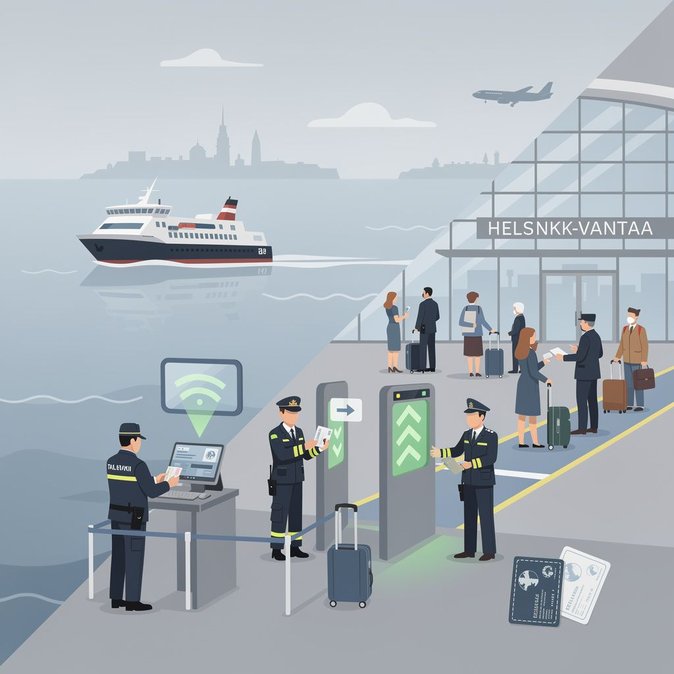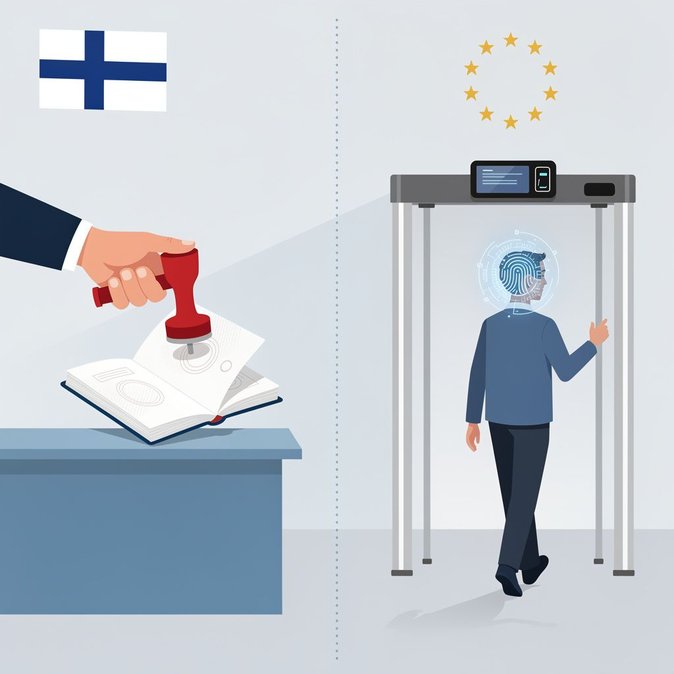
The Guardian reported on 14 September 2026 that nine EU member states—including France, Greece and Italy—have asked Brussels for more time to implement the Entry/Exit System (EES), the bloc’s new biometric border-management platform. Although Finland is not among the countries seeking a derogation, the postponement has immediate operational consequences for Finnish border authorities and carriers. Under current legislation, all Schengen states must record fingerprints and facial images of third-country nationals at every external border. Finland completed hardware installation at Helsinki-Vantaa and the ports of Turku and Mariehamn in June, and had planned a ‘soft-launch’ of full EES processing on 1 October. With major transit hubs such as Frankfurt and Schiphol now out of sync, the Finnish Border Guard confirmed to Taminta News that it will instead run the system in “monitoring-only mode” until January 2027 to avoid data-integration errors and potential queue spill-overs. For travellers this means business as usual this autumn: third-country nationals will continue to receive a passport stamp rather than a digital stay record, and carriers will not yet be required to verify EES registration before boarding flights to Finland. However, airlines operating long-haul routes to Helsinki—particularly Finnair’s partners Japan Airlines and Qatar Airways—are being asked to brief passengers about the forthcoming changes so that biometric enrolment in 2027 proceeds smoothly. Corporate mobility teams should take note of the delayed compliance timeline. Once live, EES will automatically flag overstays, making it harder to rectify inadvertent 90/180-day breaches after the fact. Employers should therefore begin auditing Schengen-day trackers this quarter, while also budgeting extra transfer time at Helsinki Airport once enrolment finally starts. The European Commission is expected to publish a revised implementation calendar in November. Finland has signalled it will align with any new deadline but will not seek an exemption of its own.
Source: The Guardian