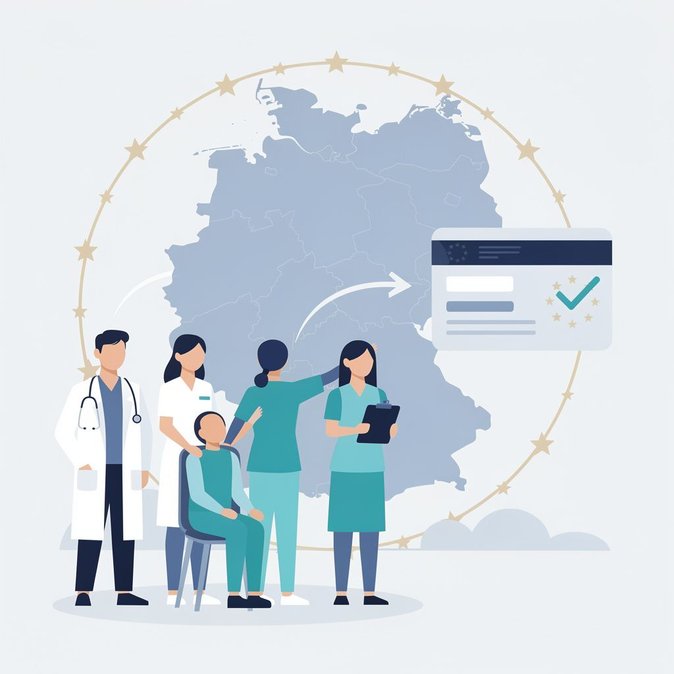
In a move welcomed by hospitals and care providers, Germany has published an official list of 12 health-sector occupations that now qualify for the EU Blue Card fast-track residence permit. According to a report first carried by News Minimalist on 21 September, the list ranges from general medical practitioners and nurses to audiologists, dietitians and environmental-health specialists. Under the revised Skilled Immigration Act that entered into force in March, Blue-Card applicants in shortage occupations must earn at least €45 934.20 gross per year—considerably less than the €50 700 threshold that applies to other sectors. By codifying the health list in guidance to local foreign-registration offices (Ausländerbehörden), Berlin aims to cut processing times from the current median of 12 weeks to as little as four. The change is expected to benefit private clinics and elder-care operators struggling with vacancy rates above 15 %. It also dovetails with federal efforts to create so-called return hubs for rejected asylum seekers, freeing administrative bandwidth for skilled-worker visas. Foreign professionals still need a recognised degree and a concrete job offer, but credential-assessment fees can now be reimbursed under an expanded employer sponsorship scheme. Recruiting agencies specialising in India, Nigeria and the Philippines say enquiries surged within hours of the announcement. Employers should note that each occupation corresponds to a specific Klassifizierung der Berufe (KldB) code, which must be entered accurately on the visa application; errors could push cases back into the standard queue. HR teams are advised to review employment contracts against the new salary floor and pre-book appointments with German missions abroad, which are expected to receive a spike in visa requests.
Source: News Minimalist