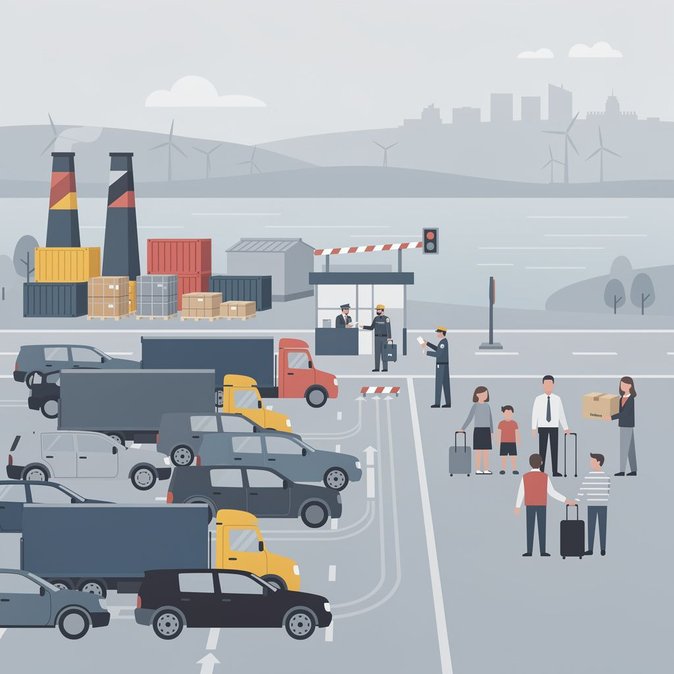
Morning commuters on 21 September found themselves once again bumper-to-bumper on the A 35 bridge over the Rhine. Additional German federal police were stopping every second car entering Baden-Württemberg from Alsace as part of the temporary controls Berlin has prolonged until March 2027. The measure, designed to curb irregular migration, has already been in place in various forms since 2015 but was most recently renewed for six months on 15 September. Regional employers say the economic cost is mounting. The Upper Rhine Chamber of Commerce told SWR that some 60,000 cross-border workers lose an average of 30 minutes a day, cutting productivity and complicating just-in-time supply chains for automotive plants in Freiburg and Offenburg. Freight forwarders report missed delivery slots at the inland ports of Kehl and Weil am Rhein and warn that small hauliers will have to pass congestion penalties on to customers. Politically, Interior Minister Alexander Dobrindt argues the checks are necessary because asylum numbers through the Balkan route remain ‘unacceptably high’. Yet critics—including the French Consulate in Stuttgart—say systematic controls violate the spirit of Schengen and threaten the Franco-German labour market that has flourished since the 2019 Aachen Treaty. For corporate mobility teams the takeaway is clear: advise travellers to budget at least an extra hour when driving or taking coaches across the frontier and to carry both passports/ID cards and employment letters to avoid secondary inspections. Companies that routinely shuttle technicians between sites on either side of the Rhine may wish to prioritise rail, which remains largely unaffected. The episode underlines a wider trend: with six EU states currently exercising some form of internal Schengen check, mobility planners can no longer assume frictionless land borders within Europe—particularly during election seasons when migration becomes a campaign flash-point.
Source: SWR Aktuell