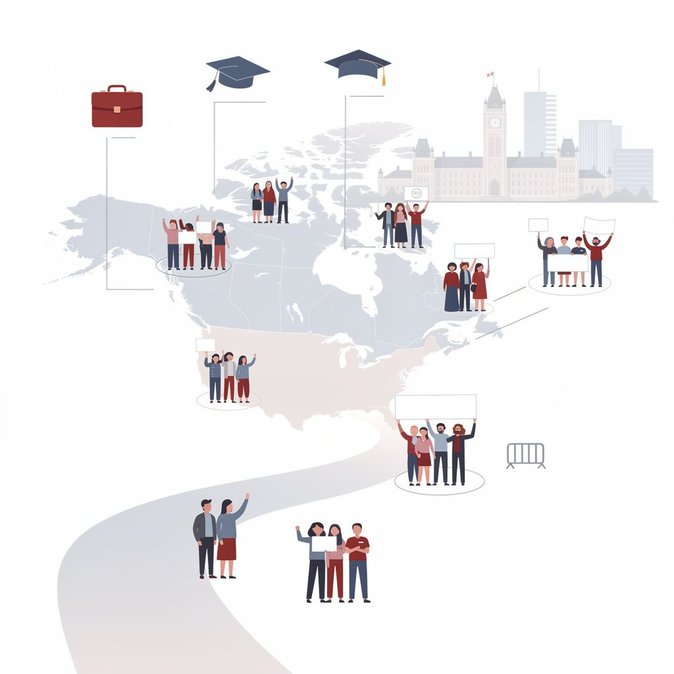
In a progress report quietly uploaded to its website and analysed on September 22, 2026, IRCC revealed that asylum claims filed between January and July 2026 were down **69 %** versus the same period in 2024. Over the same window, arrivals of temporary foreign workers fell 48 % and new international students declined 66 %. Yet the department remains “on track” to meet every target in its 2026–2028 Immigration Levels Plan for economic, family and humanitarian permanent residents. The numbers confirm a strategic re-balancing: Ottawa is throttling high-volume temporary streams while protecting routes that lead to permanent status. The tightened intake has already trimmed backlogs in several business lines, allowing processing resources to be redeployed. For companies, that could translate into faster extensions for existing work-permit holders and shorter waits for permanent-resident applicants who already have Canadian experience. From a global-mobility perspective, the data flip conventional wisdom. Employees **already** in Canada—on study, PGWP or employer-specific work permits—face less competition for permanent residence. Conversely, candidates applying from abroad encounter tougher scrutiny and longer odds, particularly in the student category. Mobility advisers should therefore encourage in-country assignees to advance PR applications before the window narrows again. IRCC did **not** announce any new caps or program suspensions in the update, leading analysts to conclude that the department is relying on administrative triage rather than legislative change to curb temporary flows. Still, the sharp fall in asylum numbers will likely reignite debate about the Safe Third Country Agreement and Canada’s obligations under international refugee law. Bottom line: Canada’s immigration system is recalibrating toward quality over quantity, and businesses that plan proactively can leverage the quieter queues to lock in their critical talent.
Source: Immigration2Canada