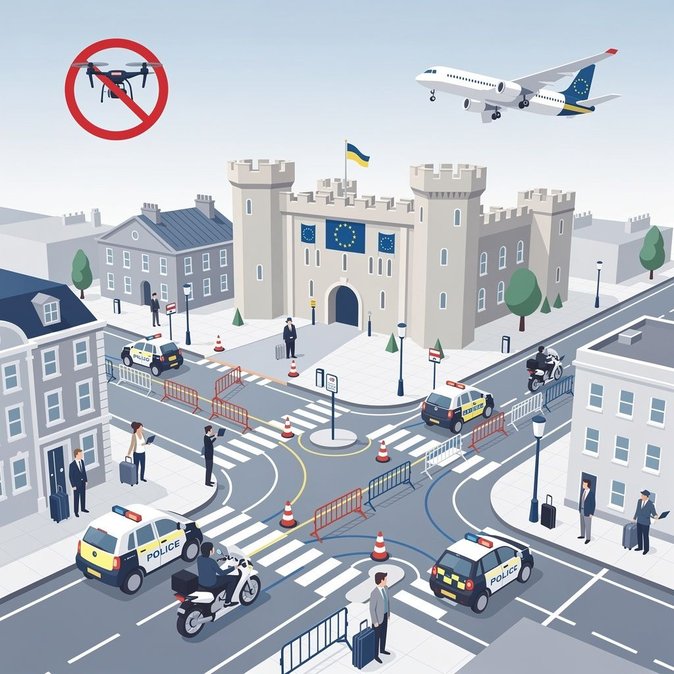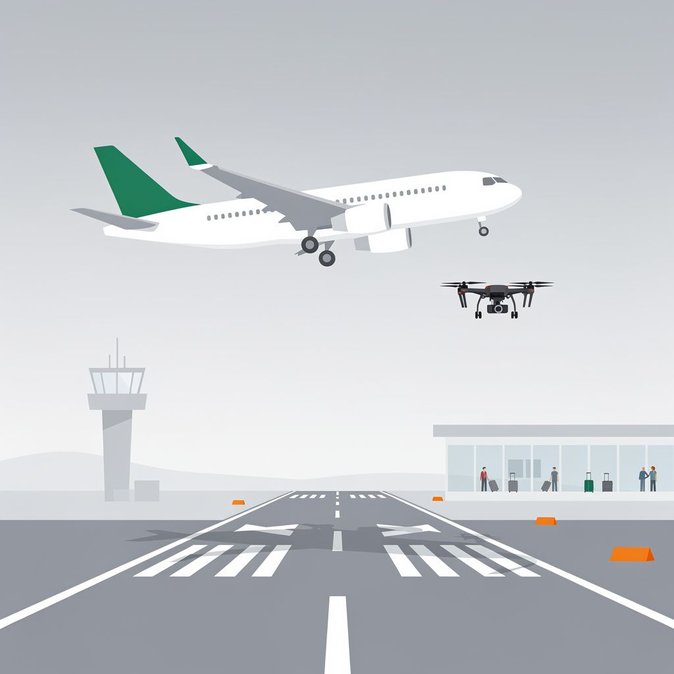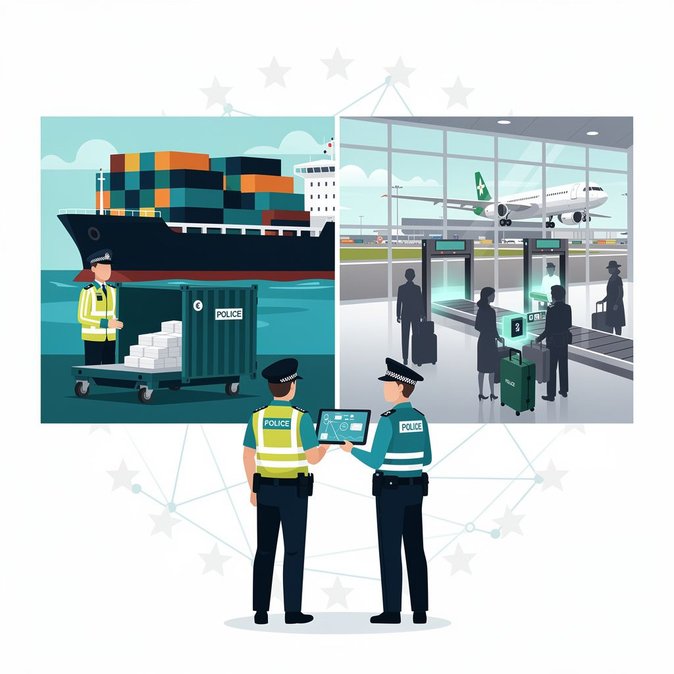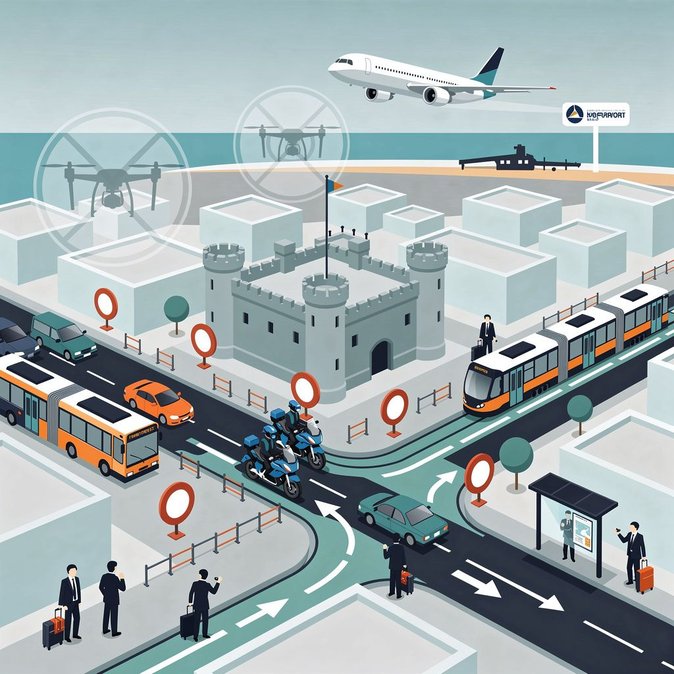
Dublin Castle has become the epicentre of European transport policymaking this week as Ireland hosts an informal meeting of EU Transport Ministers on 20–21 September under its rotating Council Presidency. While the agenda ranges from sustainable aviation fuels to cross-border rail, it is the security perimeter—rather than the policy papers—that is being felt most keenly by local commuters and visiting executives. An Garda Síochána has closed Castle Street and both Ship Streets until 31 December, creating a semi-pedestrianised enclave around the historic complex. Rolling motorcycle escorts are ferrying delegations between hotels in Ballsbridge and the Castle at peak hours, causing intermittent traffic halts on Merrion Road, St Stephen’s Green and Leeson Street. Although Dublin Airport operations remain normal, business travellers are advised to pad schedules; escort movements between 06:00 and 10:00 have already added 30 minutes to average taxi times into the city. In partnership with the Irish Aviation Authority, Gardaí have also activated Temporary Restricted Airspace (TRA) zones that ground all drones within one kilometre of the venue and along the motorcade routes. Detection systems deployed for last year’s US Presidential visit are back online and will triangulate non-compliant aircraft, with penalties ranging from confiscation to criminal prosecution. Transport Infrastructure Ireland and Dublin Bus have rerouted several services, while Bus Éireann has warned of delays on the Airport–Ballsbridge–Kells corridor. Event organisers, including corporate mobility managers shepherding EU-wide project teams, have switched to walking transfers where possible. Hotels report occupancy levels above 95 per cent, a welcome off-season boost but one that has pushed nightly rates past €400. For internationally mobile staff, the take-aways are simple: build extra transfer time into meeting agendas, check airline baggage cut-offs in case of morning gridlock, and, crucially, leave drones at home. The security overlay offers a real-time rehearsal for the larger formal Transport Council in early December—also slated for Dublin—so mobility teams should record disruption data now to refine contingency plans.
Source: An Garda Síochána Press Office