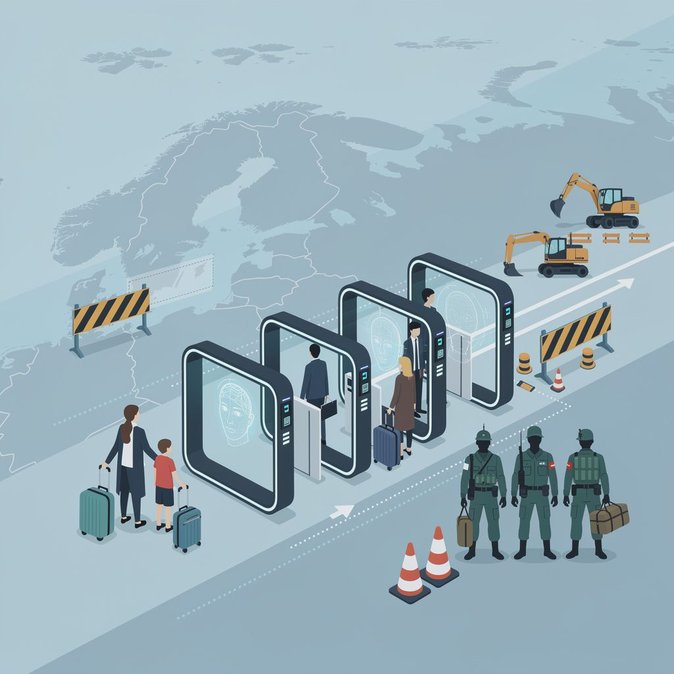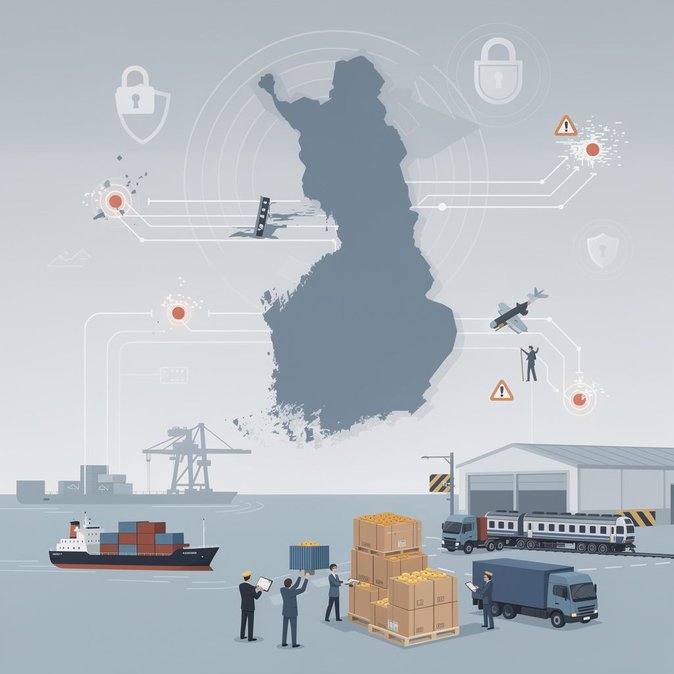
Finland’s National Emergency Supply Agency (NESA) confirmed this morning that more than 180 companies and public authorities will take part in the country’s largest ever preparedness drill, TIETO26, from 29 September to 1 October. The scenario simulates prolonged hybrid, cyber and military pressure on the food-supply chain and other critical logistics networks. Participants will be asked to keep goods and people moving while ports, borders and digital systems are being attacked in the fictional crisis. Although branded a security exercise, TIETO26 has a strong mobility dimension. NESA said the focus is on “the operational reliability of largely digitalised supply chains” and the ability of customs, ports, hauliers and wholesalers to reroute traffic if key corridors are disrupted. The agency wants to test how quickly private operators can switch to manual border-clearance processes, issue emergency drivers’ permits and share real-time data with authorities. Finland’s security environment has deteriorated since Russia’s 2022 invasion of Ukraine, leading to drone incursions, pipeline sabotage and air-space violations. Companies with cross-border operations have raised concerns that a serious incident could paralyse trade and strand international staff. By involving freight forwarders, shipping lines and large retailers, TIETO26 aims to create playbooks that keep mobility corridors open even under extreme pressure. For global employers the exercise offers a preview of how Finnish authorities would balance security controls with business-continuity needs. NESA plans to publish a lessons-learned report in November, including recommendations on fast-tracking emergency work permits and relaxing driving-hours rules if labour shortages emerge. Multinationals with Nordic supply chains are being encouraged to observe the exercise and update their own contingency plans accordingly. TIETO26 also dovetails with EU-wide discussions on resilient “solidarity lanes” that could reroute critical freight through Finland to the wider Single Market in a crisis. As the only Nordic EU member sharing a land border with Russia, Helsinki sees seamless border management as a cornerstone of both national security and economic competitiveness.