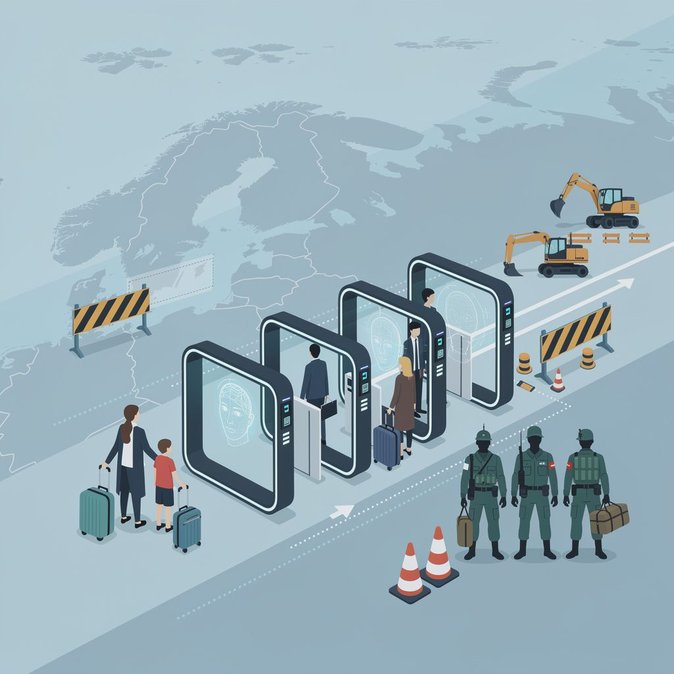
EU defence attachés and transport experts met on 25 September in Brussels for the Ad Hoc Working Party on Military Mobility. Finland’s delegation, fresh from its first full year of NATO membership, tabled proposals for co-funding to widen and digitise road and rail corridors leading to key eastern border crossings, citing lessons learned from last winter’s temporary closures. While the group’s mandate is nominally defence, its work has knock-on effects for commercial mobility. Dual-use infrastructure—bridges that can carry both tanks and HGVs, passport facilities that can switch from civilian to troop processing—often receives EU funding only if civilian benefits are demonstrated. Finland argues that faster, digitally-enabled border checks will also help business travellers once the Entry/Exit System and ETIAS go live in late 2026. Sources say Helsinki is requesting €45 million to equip the Vaalimaa crossing with biometric e-gates and to pilot an “advance traveller information portal” that would pre-clear both soldiers and supply-chain drivers. The Finnish Border Guard has already tested similar technology at Helsinki Airport, cutting manual passport inspection time by 40 percent. The Working Party’s conclusions feed into the next Connecting Europe Facility (CEF-Military Mobility) call expected in November. Companies moving goods or staff between Finland and the Baltics should watch for funding decisions—successful projects often come with temporary lane closures and procedural changes that can disrupt routine travel.
Source: Council of the EU (Consilium)