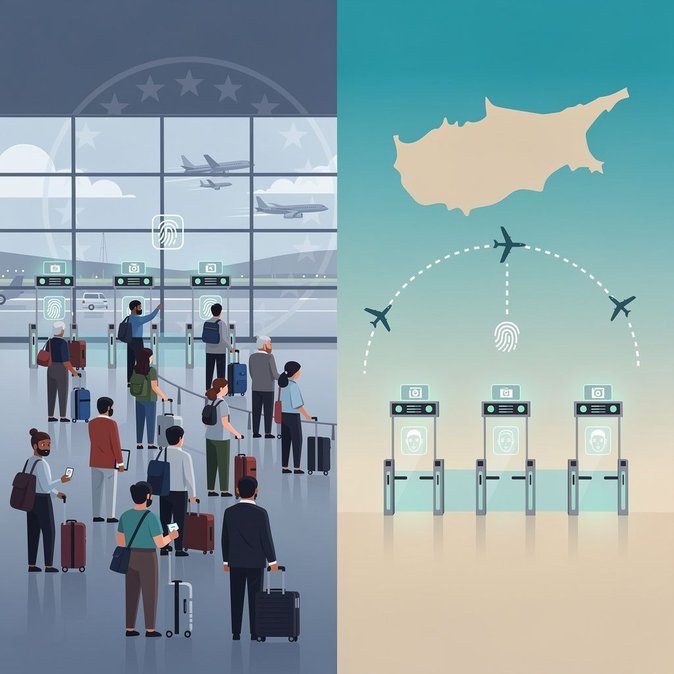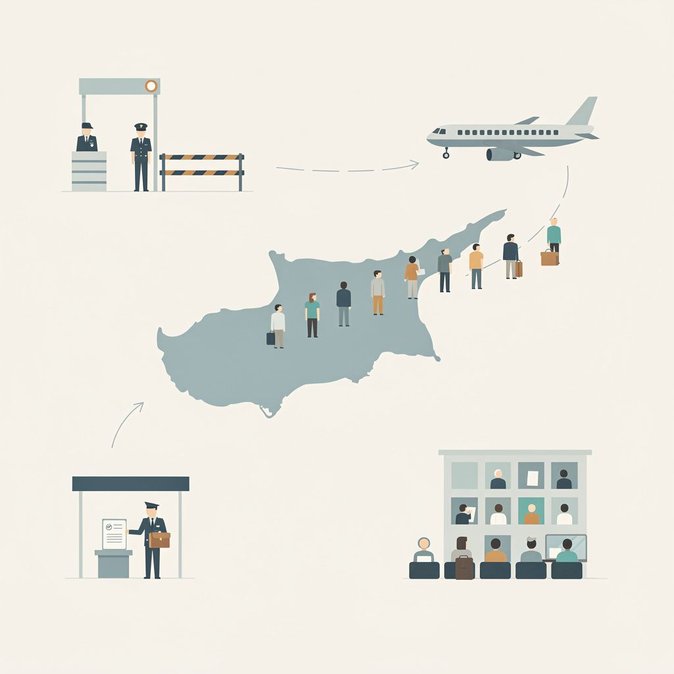
The Cypriot government’s drive to reduce irregular migration gathered pace this week, with the Aliens and Immigration Unit confirming that 208 people without legal residence status left the island between 18 and 24 September. According to the Cyprus News Agency, the departures were arranged through a mix of forced deportations and assisted voluntary-return programmes run in cooperation with the Deputy Ministry of Migration and International Protection. The latest figures bring the tally of returns since 1 January 2026 to 7,014—already surpassing the total for the whole of 2025. Interior-ministry officials say the acceleration reflects tighter border checks at crossing points, stepped-up workplace inspections and new fast-track procedures at Paphos and Larnaca airports. Charter flights to countries including Pakistan, Nigeria and Georgia have been operating almost weekly, while the International Organization for Migration (IOM) is co-funding one-off cash grants for families who opt to go home voluntarily. Cyprus has struggled for years with one of the EU’s highest per-capita asylum-application rates, driven largely by arrivals from the Turkish-administered north who cross the UN-patrolled Green Line. Since assuming the rotating Presidency of the Council of the EU in January, Nicosia has framed its migration policy around ‘effective returns’, arguing that swift repatriations both deter new arrivals and free up resources for genuine refugees. For employers of foreign staff, the message is clear: ensure every third-country national has a valid residence permit and that any changes of role or location are promptly reported. Companies that are found to be employing migrants who have overstayed their visas now face fines of up to €2,000 per worker and a possible temporary suspension of their recruitment licence. Multinationals are therefore advised to review internal compliance processes, double-check that renewal applications are submitted on time and make use of the government’s new SMS status-checking service. Looking ahead, the Deputy Ministry plans to open a ‘One-Stop Returns Centre’ near Larnaca airport by December, combining detention facilities, health screening and consular-services offices under one roof. If the current return tempo is maintained, officials believe Cyprus could reduce its backlog of rejected asylum-seekers by a third before the end of the year—an outcome that would bolster Nicosia’s push for Schengen-area accession in 2027.
Source: Cyprus News Agency (CNA)