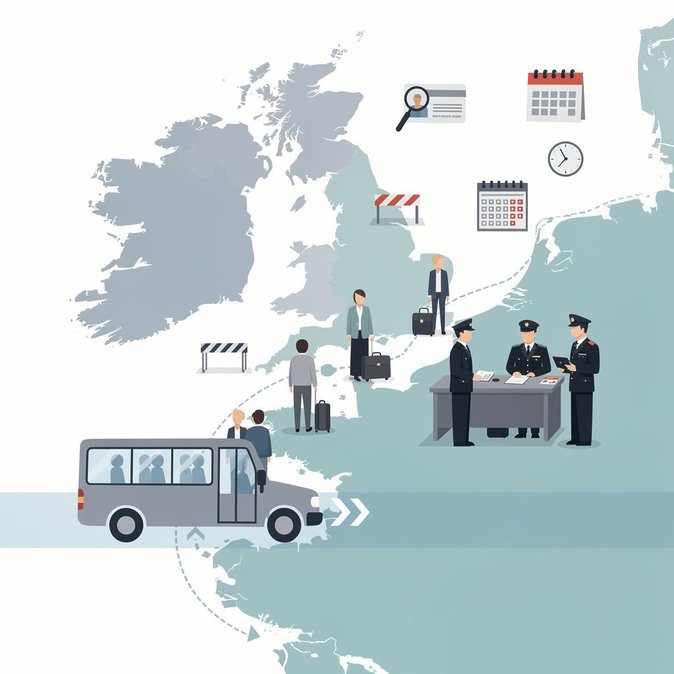
Irish companies that move staff back and forth to Great Britain woke up this morning to a stark reminder that the Common Travel Area (CTA) is not a free-for-all. Late last night the UK Home Office confirmed that a three-day multi-agency operation—codenamed “Operation Comby”—led to 49 arrests at seaports, airports, rail hubs and on key arterial roads linking Ireland and the United Kingdom. The sweep, which ran from 22 – 24 September but was announced on 29 September, specifically targeted organised criminal gangs abusing the land border and ferry routes to move undocumented migrants from the Republic into Britain. Although Immigration Enforcement said legitimate CTA travel remains unaffected, officials stressed that carriers and employers must redouble identity-checking and right-to-work due-diligence. A number of those arrested—including two Romanian nationals picked up at Belfast International Airport after flying in from Dublin—had gone on to look for work using forged documentation. The UK government says it will double the Immigration Enforcement budget and boost head-count by 60 % by 2029; Irish border security sources privately expect more joint operations. For mobility managers the message is clear: always document the nationality and travel history of assignees who move between Ireland and the UK. While Irish and British citizens retain the right to live and work throughout the CTA, third-country nationals transiting the land border need the correct Irish residence permission **and** UK immigration status. Companies relying on short-notice moves or “day-trippers” between Dundalk and Belfast should build in extra lead-time for spot checks and potential delays. Practical steps include auditing ferry and coach suppliers to ensure passenger manifests are lodged in advance, refreshing employee communications about carrying evidence of status, and testing HRIS systems to flag CTA movements that might trigger UK right-to-work obligations. Recruiters should also note that arrests in Northern Ireland featured counterfeit electronics worth £130,000—an example of how illegal work and wider criminality can intersect. In the medium term, both Dublin and London are under political pressure to show the CTA is not a loophole in post-Brexit border controls. Further joint enforcement weeks are therefore likely, and businesses with cross-border supply chains—especially in agri-food, logistics and construction—should monitor travel disruption alerts and budget for compliance training.
Source: UK Home Office (GOV.UK)
How VisaHQ can help
VisaHQ simplifies the visa application process for individuals and businesses. Check current travel requirements, prepare the required documents and manage your application online through the VisaHQ Ireland portal.More From Ireland
View all
Employment-permit processing times published for 29 September 2026 show fastest ICT approvals but backlog elsewhere
Irish Ferries and Stena Line introduce mandatory passport or passport-card checks on Ireland–UK routes