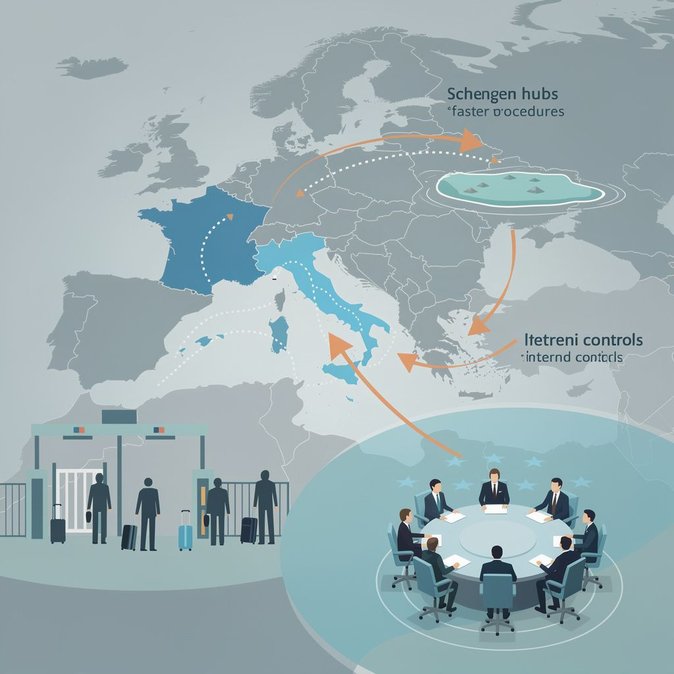
Italy’s Interior Minister Matteo Piantedosi used the 26–27 September Munich Migration Summit to push a tougher, EU-wide stance on irregular migration. In remarks published by the Italian Foreign Press Agency AISE on 28 September, Piantedosi urged fellow ministers from 18 EU countries to back the creation of processing and return hubs in third countries, mirroring Rome’s bilateral accord with Albania. The minister argued that accelerated border procedures and off-shore facilities would act as a deterrent to smugglers and reduce pressure on Mediterranean frontline states like Italy. He also pressed for stricter rules on NGO rescue vessels, claiming some operations ‘encourage traffickers’. Piantedosi highlighted Italy’s early implementation of the EU Pact on Migration and Asylum — in force since 12 June — but said member states still lacked “incisive tools” to execute fast removals of failed asylum seekers. The intervention comes as EU agencies finalise the 2027 interoperability roadmap for border IT systems and as Germany debates reactivating Dublin transfers to Italy. Observers note that Rome’s call for externalised processing aligns it more closely with the positions of Austria and Denmark, potentially setting up clashes with Germany and Spain, which remain cautious about extra-territorial approaches. For global-mobility managers, the proposals signal possible future changes in visa-issuance timelines and increased scrutiny at Schengen external borders. Companies moving non-EU talent into Italy could face longer pre-departure compliance checks if accelerated procedures shift resources away from regular visa processing. Conversely, a clearer returns mechanism might ease public-opinion pressures that periodically lead to ad-hoc border closures within the Schengen area. Diplomatic sources confirmed that Italy held bilateral talks on the summit sidelines with Ireland (current EU Council presidency), Greece, Switzerland, the UK and Lithuania to seek support for the ‘Albania model’. Any formal legislative proposal is expected to surface during the Justice and Home Affairs Council in December.