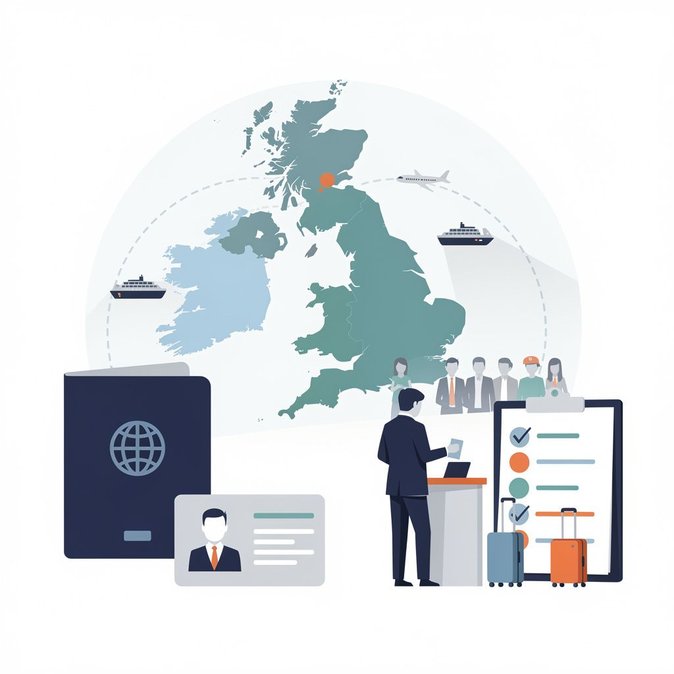
The UK Foreign, Commonwealth & Development Office (FCDO) on 29 September updated its travel-advice page for Ireland to include a new section on acceptable identification for travel between the UK and Ireland under the Common Travel Area (CTA). The guidance confirms that British and Irish citizens continue to move freely without routine immigration controls but notes that carriers may require photographic ID and that other nationalities must carry passports meeting Irish entry rules even on ferry or domestic-style flights. The clarification follows reports of carriers turning away passengers who presented non-standard documents—driving licences, for example—on routes such as Holyhead–Dublin. The FCDO now explicitly lists passports, photo driving licences and government-issued age cards as commonly accepted ID for citizens, while warning that airline policies vary. For mobility managers, the change matters because many short-notice trips between UK and Irish offices occur via low-cost carriers that enforce stricter documentation than the legal minimum. Employers should circulate the new advice to staff and contractors to avoid last-minute boarding denials, particularly for mixed-nationality teams where non-British/Irish members may assume CTA privileges that do not apply. The update also reminds travellers that Ireland remains outside the Schengen Area and therefore is not subject to the EU Entry/Exit System; CTA routes likewise bypass UK ETA requirements scheduled for expansion in 2027. However, staff transiting through Great Britain onward to Ireland will need to meet UK ETA rules once they come into force for their nationality. Companies should audit internal travel guidance, ensuring booking tools flag ID requirements on CTA routes and that expense policies cover potential costs of emergency travel documents if mistakes occur.