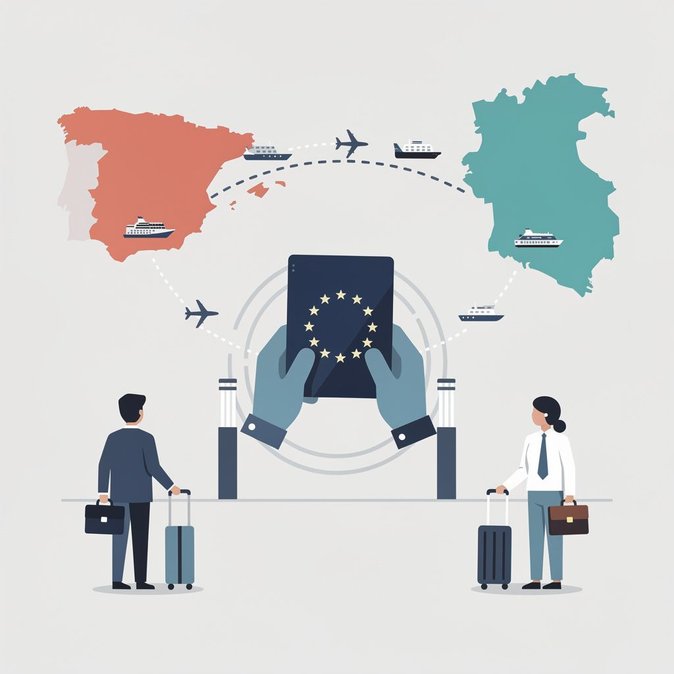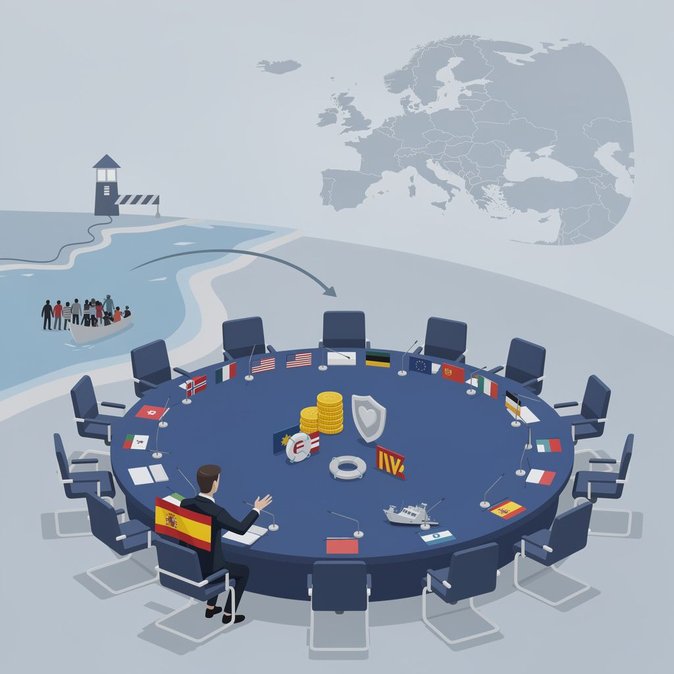
Speaking at the Justice and Home Affairs Council in Luxembourg on 1 October, Spain’s Interior Minister Fernando Grande-Marlaska urged fellow ministers to back a ‘solidarity mechanism’ that would release emergency EU funds and rapid-response teams when a member-state faces a sudden mass-entry event like the one Spain experienced in Ceuta on 30-31 July. He insisted that, despite the unprecedented influx of up to 80 000 people, “not a single migrant” has reached another EU country thanks to Spain’s containment efforts. Grande-Marlaska argued that the existing Schengen toolbox should be complemented by automatic financial support and streamlined return procedures so frontline states are not compelled to impose unilateral border checks or negotiate ad-hoc relocations. His appeal follows weeks of bilateral friction with Italy and Austria, both of which criticised Spain’s handling of the Ceuta arrivals and introduced additional controls claiming secondary-movement risks. Several delegations, including Germany and the Netherlands, welcomed the call for predictable burden-sharing but asked Madrid to accelerate fingerprinting and asylum triage so that Eurodac hits can be generated within 24 hours. Commission Vice-President Magnus Brunner confirmed that Brussels is analysing whether the Ceuta situation meets the criteria for the €600 million Border Emergency Fund created last year. For mobility professionals the minister’s speech signals that intra-Schengen checks could persist until a coordinated mechanism is agreed. Businesses that depend on seamless movement of technicians between Spain and other member-states should therefore budget for possible travel disruptions through the final quarter. Relocation providers also note that fast-track return procedures may affect foreign employees whose asylum claims are rejected and stress the importance of ensuring work-permit holders maintain clear documentary records. The next debate on the solidarity instrument is scheduled for the 12 October informal Council in Graz. Observers say Spain will use its leverage in the EU Presidency rotation starting January 2027 to push the proposal onto the legislative fast track.
Source: El País