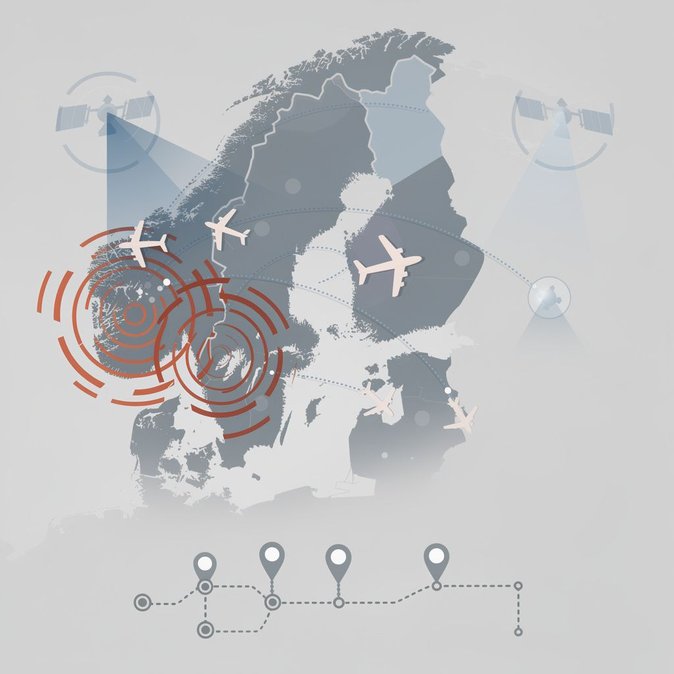
A live bulletin issued on 4 October by aviation-risk platform FlySafe shows that 86 – 100 % of aircraft flying over a 61°N 26°E grid in south-eastern Finland reported degraded GPS integrity every day between 1 September and 2 October. The hotspot—roughly the lake district between Lahti and the Russian border—marks the most persistent interference since the late-August Gulf of Finland spike. Yet Helsinki-Vantaa Airport maintained a baseline of 450 daily movements, underscoring the resilience of Finland’s layered navigation system. Finland’s Transport and Communications Agency (Traficom) attributes most interference to cross-border “self-protection” jamming from Russia’s Western Military District. Signals spill dozens of kilometres into Finnish airspace, forcing aircraft to switch to inertial reference and ground-based radio beacons. Airlines are not cancelling flights, but dispatchers have tightened fuel reserves and re-briefed crews on non-GNSS procedures. Finnair confirmed it has revalidated its VOR-DME contingency for eastern approach paths. For corporate mobility teams, the message is to stay alert rather than alarmed. While passenger itineraries are unaffected, GPS-dependent services—ride-hailing apps, e-SIM-driven expense trackers or company drones—may show outages east of Helsinki. Employers sending travellers to the region should advise them to download offline maps and keep paper boarding passes. Logistics firms using geofencing for high-value cargo shipments may need to fall back on cellular triangulation. Regulatory ripples are already visible. The European Union Aviation Safety Agency (EASA) updated its Safety Information Bulletin on GNSS interference in July, urging operators to train crews on loss-of-signal scenarios. Finnish authorities have gone further, fast-tracking a bill that would grant the Border Guard new powers to supervise underwater infrastructure and deploy drone-mounted RF sensors—a proposal now before Parliament’s Defence Committee and expected to pass by year-end. Despite the technical challenges, analysts stress that Finland’s proactive reporting adds transparency rarely seen in GPS-jamming discussions. By publishing real-time interference indices, FlySafe and Traficom help carriers calibrate risk, keeping Finland open for business even as Europe’s electronic-warfare landscape evolves.
Source: FlySafe.zone