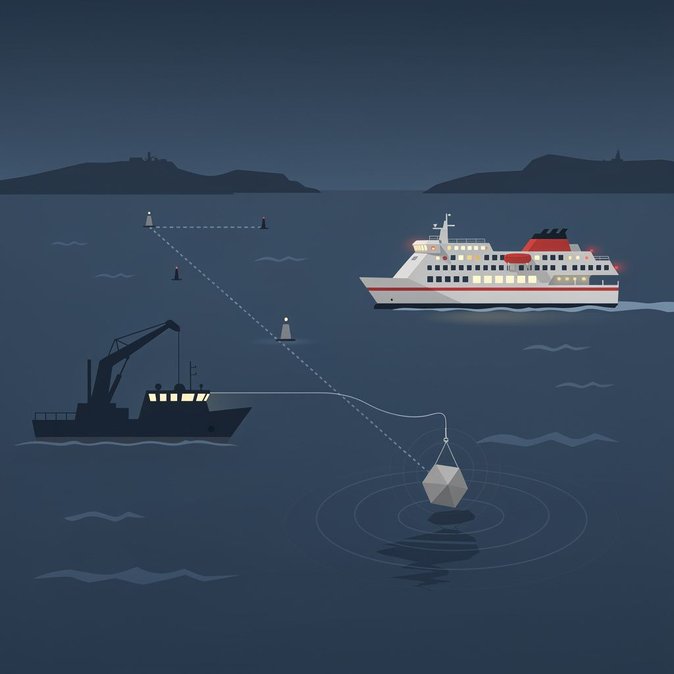
Ferry traffic between Helsinki and Tallinn was disrupted on the night of 3 – 4 October after the Finnish Border Guard spotted a mysterious metal object drifting in the main shipping channel south of the Kustaanmiekka strait. According to officials, the alarm was raised at 19:20 on Saturday evening when border-guard patrols reported the find to police. Within minutes, a multi-agency response was under way: police cordoned off the area, the Finnish Navy dispatched a Hamina-class missile boat, and divers prepared to secure the object for recovery. The priority was maritime safety. The busy route from Helsinki’s South Harbour to Estonia carries more than ten daily departures, including Tallink Silja and Viking Line services that move 20,000 passengers and significant freight every weekend. Because the object lay directly on the buoyed fairway, the 20:00 Viking XPRS sailing was ordered to hold its departure. With harbour berths blocked and passengers already on board, operators feared knock-on delays to Sunday’s schedule and potential EU compensation claims for long delays. By 01:30 the Navy had winched the 40-centimetre object onto a deck cradle and towed it to the Santahamina naval base for forensic checks. Preliminary analysis suggests it is an engineering fragment—possibly a valve casing—from a 20th-century wreck, not an explosive device. Nevertheless, the incident exposed the vulnerability of the Gulf of Finland’s narrow lanes to small-scale hazards. Maritime insurers note that a six-hour stop can cost operators more than €250,000 in crew overtime, missed connections and passenger care. For corporate mobility managers the lesson is clear: even Europe’s most reliable short-sea corridors can face sudden closures. Companies moving staff or time-critical cargo between Finland and the Baltics should keep contingency budgets for hotel accommodation, advise travellers to carry overnight essentials, and monitor Finnish Border Guard and harbour-master feeds in real time. Although services resumed at 02:00, experts say the episode will accelerate calls for sonar sweeps and better AIS-based hazard alerts along the route. Looking ahead, the Finnish Transport and Communications Agency (Traficom) has already commissioned a review of emergency protocols for Helsinki’s approaches. A report is expected by December and could recommend mandatory secondary routes or speed restrictions when unexplained objects are detected. For now, authorities stress that passenger safety was never compromised—but the incident is a reminder that border-security issues and maritime mobility are increasingly intertwined in the Baltic region.
Source: LB.ua / Yle via LB.ua