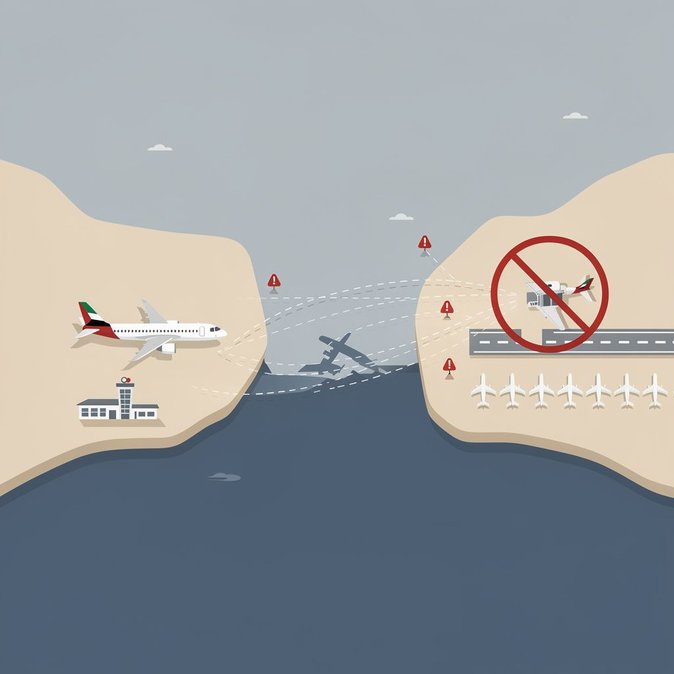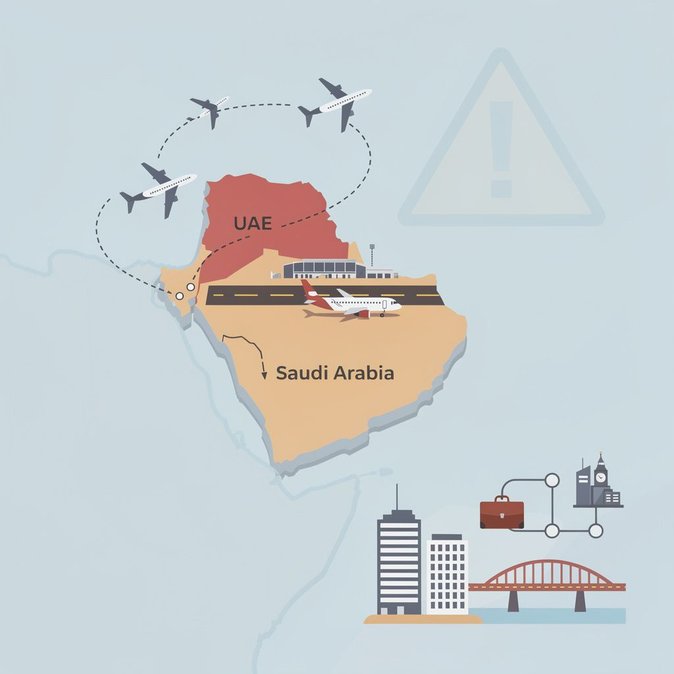
The deadly 10 October attack on Riyadh’s King Khalid International Airport continues to ripple through Gulf aviation networks. Etihad Airways cancelled eight round-trip services between Abu Dhabi and Riyadh on 11–12 October, while flydubai suspended its Dubai–Riyadh route until at least 14 October. Flight-tracking data show additional delays on Saudia and Flynas services transiting UAE airspace. The cancellations have upended schedules for consultants, oil-and-gas contractors and event planners who routinely commute between the UAE and Saudi Arabia. One Riyadh-based freelancer told Khaleej Times he postponed a trip to the Sharjah International Book Fair, fearing further airport closures. Travel-management companies report a spike in last-minute itinerary changes and requests for virtual alternatives to in-person meetings. The UAE Ministry of Foreign Affairs condemned the attack as a “flagrant violation” of Saudi sovereignty and urged citizens to monitor airline advisories. Insurance brokers note that most corporate travel policies treat acts of terrorism as force-majeure events, triggering benefits such as trip-cancellation cover and emergency ticket re-issues. However, travellers must retain proof of airline disruption—screen captures of cancellation notices or emails—to file claims. Operationally, Etihad has redistributed wide-body aircraft to high-demand routes such as Abu Dhabi–Jeddah and Abu Dhabi–Dammam, while cargo operators are re-routing freight through Dammam’s King Fahd International Airport. Mobility managers with staff on split Saudi-UAE rosters should review contingency plans, including land transport via the Ghuwaifat border crossing or charter solutions through Bahrain.
Source: Khaleej Times