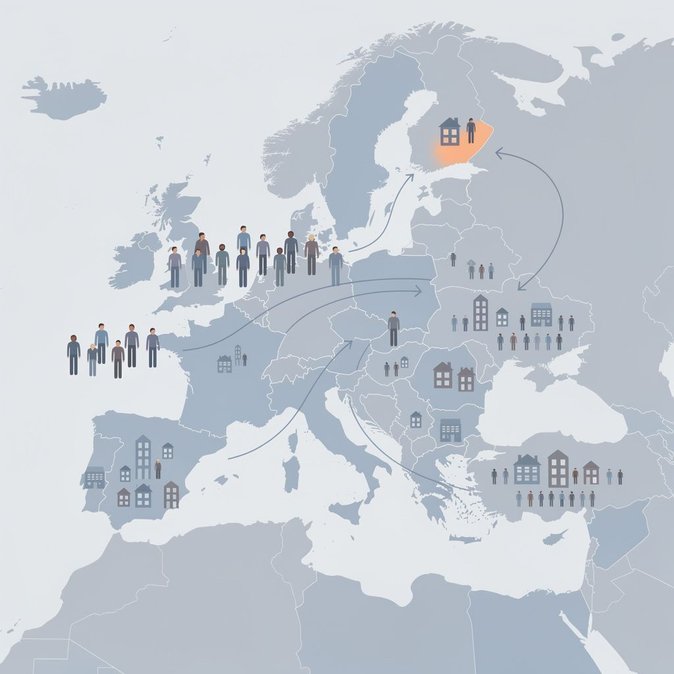
The Publications Office of the European Union has published notice MD/12/2026 confirming that the Asylum Service of the Republic of Cyprus has signed a €1.48 million service contract with the International Organization for Migration (IOM). The project will organise the relocation of 1,283 people who have applied for international protection in Cyprus to other EU member states under the bloc’s new mandatory solidarity mechanism. The award, dated 18 October 2026, is one of the first concrete implementations of the mechanism approved earlier this year as part of the EU Pact on Migration and Asylum. Cyprus—an island of just over one million residents—receives more asylum applications per capita than any other EU country. Nicosia has repeatedly argued that structural relocation is essential if the country is to maintain reception standards while preparing for Schengen accession. Under the contract, IOM will organise pre-departure orientation, medical checks, escorted travel and reception coordination in the destination countries. The notice states that price was the sole award criterion, suggesting a rapid, operational focus. The destination member states have not been named publicly, but officials indicated that Germany, France, the Netherlands and Portugal have pledged places through 2027. For companies that move staff to and through Cyprus, the programme matters in two ways. First, it should relieve pressure on the island’s reception centres—particularly the Pournara camp near Nicosia—freeing immigration officers to clear business-travel and work-permit backlogs that have grown over the past two quarters. Second, it signals that the EU’s solidarity mechanism is finally operational, giving multinational mobility managers a clearer picture of how secondary-movement risks will be handled across the bloc. Practical tip: employers with third-country assignees in Cyprus should still plan for extended lead times on first-time appointments through December, but renewals are expected to accelerate once the first relocation flights depart in early 2027. Mobility teams should also monitor destination-state integration requirements, as relocated asylum-seekers may compete for housing in the same rental markets as expatriate employees.