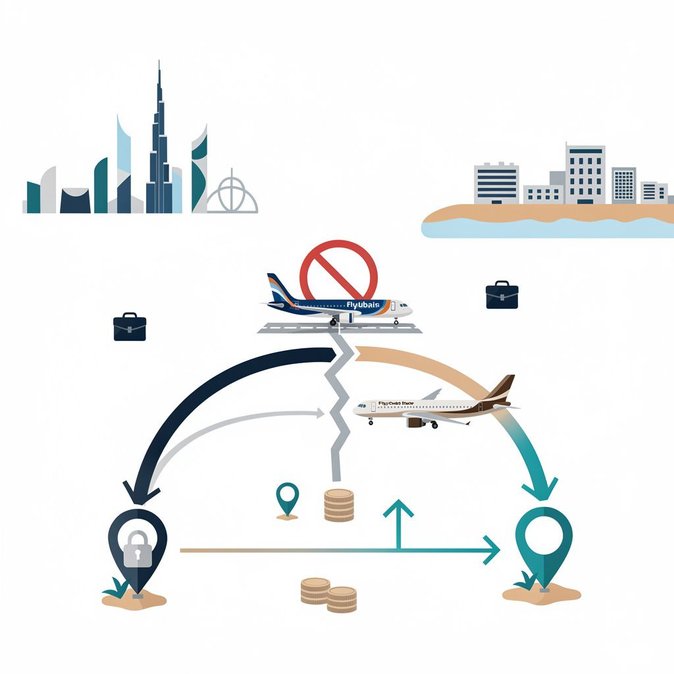
Three weeks after a foiled terrorist plot on Flydubai flight FZ1073, the low-cost carrier has extended its suspension of Dubai–Tel Aviv services until at least 15 November 2026, with seats now blocked through year-end. An investigative piece published on 21 October by Jewish News Syndicate (JNS) confirms that both Flydubai and Emirates have halted bookings amid an ongoing dispute over aviation-security protocols with Israeli authorities. At the heart of the impasse is Israel’s demand to station its own security marshals and install proprietary X-ray units at Dubai International Airport—measures the UAE views as an infringement of sovereignty. Negotiations brokered by the International Civil Aviation Organization have yet to produce a compromise. The suspension is a blow to business travellers: before the 30 September incident, Flydubai operated up to ten daily rotations, carrying tech entrepreneurs and tourists who connected onward to Asia. Travel-management companies report fares on the remaining Etihad Abu Dhabi–Tel Aviv route—now six daily flights—have spiked by 60 percent, with some corporates rerouting through Amman or Istanbul. For UAE-based firms with operations in Israel, contingency plans should include extended layovers, higher ticket budgets and alternative gateways such as Larnaca or Athens. Mobility teams should also monitor visa-on-arrival rules: Israeli passport holders may still enter the UAE visa-free, but those arriving via third-country connections must ensure carriers recognise the bilateral agreement. Analysts expect that, unless a security memorandum is signed before the Hanukkah travel rush in December, airlines will redeploy capacity to high-yield Gulf–Europe routes, delaying a full restoration of the Abraham-Accords air link well into 2027.
Source: Jewish News Syndicate (JNS)