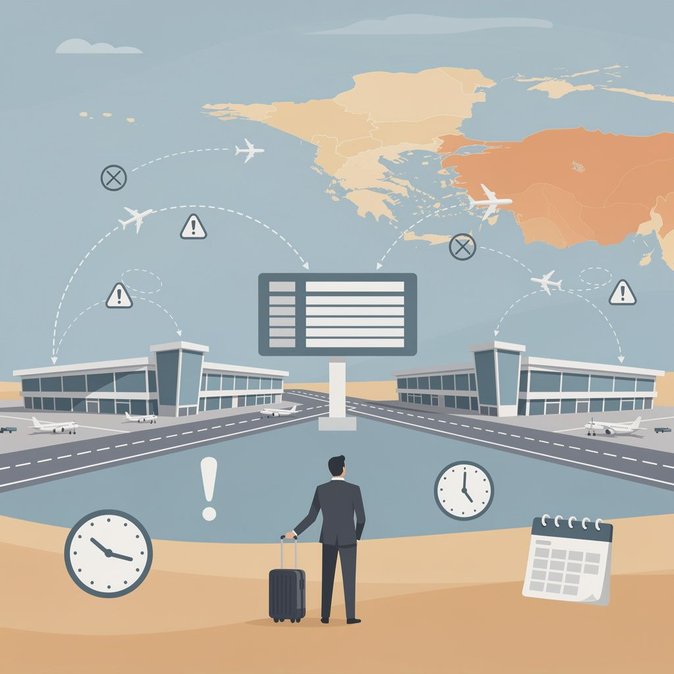
Business travellers faced a difficult start to the day on 21 October as carriers across the Gulf trimmed schedules in response to escalating security concerns in Saudi Arabia. Gulf News reports that Emirates, Etihad, flydubai and Air Arabia scrubbed dozens of services to Riyadh, Dammam, Jeddah and Abha, while some Iranian and Israeli sectors remain suspended. At the peak of the disruption Dubai International’s departure board showed more than 20 delays and nine outright cancellations, with some SpiceJet flights to India pushed back by 18 hours. Etihad cancelled all Saudi flights through 24 October, while Emirates listed multiple rotations on the ‘zero Hormuz’ east-coast routing as “inactive”. The low-cost operator flydubai axed entire banks of flights to the Kingdom, and Air Arabia pulled services from both Sharjah and the capital. International carriers from Air France to IndiGo mirrored the moves, prompting the UK, US and Australian governments to reiterate existing warnings about potential missile and drone activity in Saudi airspace. Airport operations inside the UAE remained orderly, but corporate travel managers scrambled to reroute executives headed for meetings in Dammam’s energy corridor and Riyadh’s financial district. The Dubai office of a Big Four firm said it switched a team of consultants onto virtual sessions after their midday flight was pulled with two hours’ notice. Freight forwarders also reported knock-on effects, with time-sensitive shipments being diverted through Bahrain and Kuwait. Travel-risk advisers are telling clients to monitor airline apps hourly, build extra layover buffers and prepare contingency plans such as remote signings or hybrid events. Airlines are offering free date changes or refunds, but seat availability is tightening as passengers rebook onto already-full services later in the week. With the situation in flux, mobility managers are urged to keep travellers on company insurance policies and maintain real-time communication channels for rapid approvals of alternative routings. Although the UAE itself is not the target of current threats, the episode underlines how quickly regional geopolitics can reverberate through the country’s status as a major transit hub. Organisations with operations in both the Emirates and Saudi Arabia are reviewing split-office staffing models and exploring cross-border remote-work arrangements to maintain project timelines during future flare-ups.
Source: Gulf News