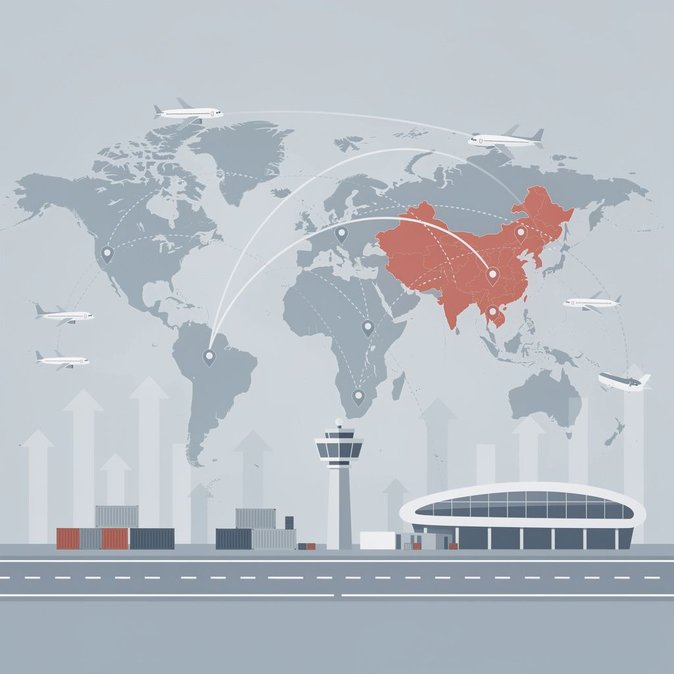
The Civil Aviation Administration of China (CAAC) quietly posted its monthly Transport Production Statistics bulletin for September 2026 on 20 October, offering the most authoritative snapshot yet of post-pandemic air-travel recovery. While the PDF attachment contains the granular tables, the release confirms that both passenger and cargo volumes continued their double-digit climb, extending the positive streak recorded since mid-2025. Industry insiders who have reviewed the figures say domestic passenger numbers have plateaued at roughly 120 percent of 2019 levels, while international passenger volume has climbed to around 78 percent of the pre-COVID baseline—up from just 65 percent six months ago. International belly-hold cargo capacity is reported to have recovered to 92 percent of 2019 tonnage, a critical metric for supply-chain managers moving high-value components and time-sensitive pharmaceuticals. For corporate travel teams, the September data matter because they set baseline slot allocations for the IATA Winter 2026/27 schedule that begins on 25 October. Airlines must submit traffic rights applications based on proven demand, and the stronger numbers give Chinese carriers greater leverage when negotiating code-share expansions and joint-venture flying with overseas partners. Foreign airlines contemplating capacity increases—especially on secondary Chinese routes—can cite the bulletin to justify additional frequencies. The bulletin also comes as China finalises its 15th Five-Year Civil Aviation Plan, which is expected to prioritise hub-and-spoke optimisation, green fuel trials and the roll-out of single-token biometric processing at major airports. Mobility managers should anticipate further regulatory circulars that may affect crew lay-over rules and minimum connection times. Practical tip: although demand is surging, the CAAC retains the authority to cap weekly frequencies on routes deemed sensitive for market-share or bilateral-quota reasons. Travel bookers should build contingency routings—especially via Hong Kong, Seoul and Singapore—until winter slots are fully confirmed in early November.