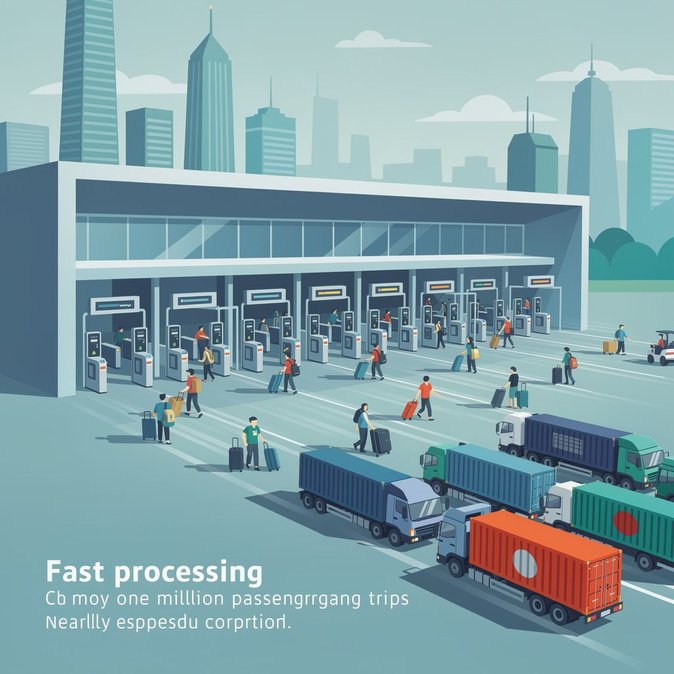
Hong Kong’s newest land checkpoint – the re-engineered Huanggang Port – has become the city’s most vivid barometer of the border-reopening boom. Data released on 21 October show the port handled 886,000 passenger movements and 74,000 vehicle crossings in its first full week of service – a volume officials call “beyond stress-test levels.” Travellers heading into Hong Kong on the last day of the Chung Yeung Festival long-weekend waited as little as 15 minutes, a stark contrast with the two-hour queues reported earlier in the week. The surge coincides with Beijing’s liberalisation of short-stay, visa-free entry for citizens of 54 countries and with new “collaborative inspection” e-channels that allow Hong Kong and mainland officers to clear a traveller in a single stop. According to National Immigration Administration statistics, visa-free foreign entries across China rose 24.1 % year-on-year in Q3, making up more than three-quarters of all inbound foreign traffic. For multinationals the numbers matter. Shenzhen’s tech parks are once again within a 30-minute coach ride for executives overnighting in Central, while Hong Kong retailers are seeing footfall rebound to 2019 levels. Logistics firms that rely on cross-boundary truckers say the 24-hour cargo lanes at Huanggang have already shaved a day off delivery cycles to the Pearl River Delta. Yet the crowds have also exposed pinch points. Lawmakers have urged the Immigration Department to widen the e-Channel enrolment window, and transport planners are studying whether franchised bus quotas need to double during peak holidays. HR teams arranging cross-border assignments are being advised to book staff buses well ahead of Christmas when Huanggang’s daily throughput could exceed 200,000 passengers. Analysts believe the port’s early success will accelerate similar “one-stop” border redevelopments at Lo Wu and Shenzhen Bay. For Hong Kong, that means the city’s historic role as the springboard between China and the world is regaining momentum—powered this time by technology-enabled clearance and aggressive visa liberalisation on the mainland side.
Source: South China Morning Post