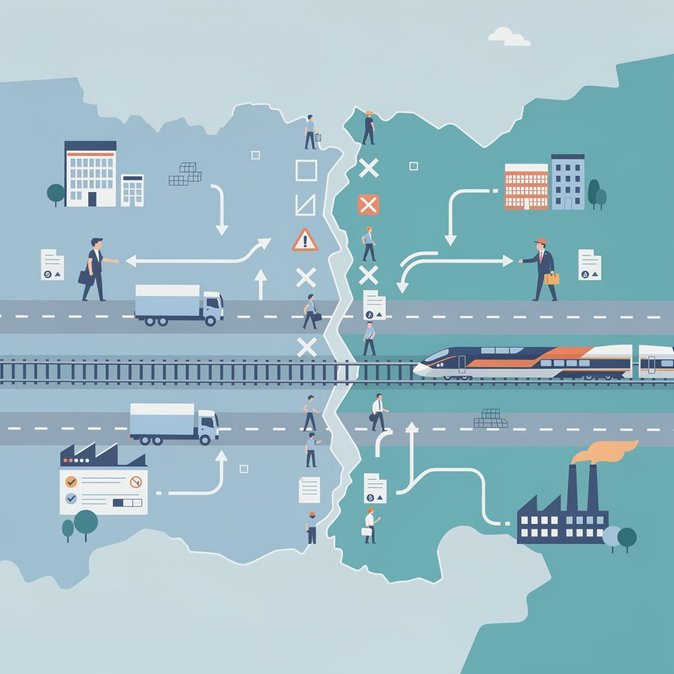
A new report from the Interreg France–Wallonia–Flanders LIM-EX project has identified 17 priority obstacles that hinder the daily mobility of the 500,000 people who live or work on either side of the Franco-Belgian border. Published on 11 November, the list was distilled from 68 systemic issues gathered during a year-long public consultation that produced 134 stakeholder submissions. Twelve of the obstacles have a legal dimension—such as incompatible rules on the taxation of cross-border commuters and the mutual recognition of professional qualifications—while five stem mainly from administrative complexity. Transport figures prominently: differences in freight-weight limits on secondary roads, unaligned road-safety signage, and non-interoperable ticketing for regional bus and rail networks make cross-border journeys slower and more expensive. On the passenger side, survey respondents complained that season tickets valid in Lille are refused on Belgian De Lijn buses that cross the frontier, forcing commuters to buy duplicate passes. Business associations added that cabotage limits and night-time lorry restrictions on the Belgian side create planning headaches for French logistics firms serving clients in Flanders. The findings matter for companies that treat Lille-Kortrijk-Tournai and Mons-Maubeuge as single labour markets. HR teams recruiting scarce digital talent, for example, may lose candidates who shy away from double social-security contributions or unclear healthcare entitlements when teleworking across the border. The LIM-EX consortium—comprising 18 public bodies and universities—will now task legal and technical experts with drafting solution roadmaps to be debated in workshops in Mons, Lille and Bruges early next year. EU funding rules require measurable progress before the project ends in December 2029, raising expectations that at least some hurdles will be cleared within three years. Companies with cross-border staff should follow the workshops closely: pilot agreements on ticketing interoperability or streamlined tax certificates could reduce costs and paperwork well before formal treaty changes. More broadly, the exercise is a bell-wether for similar cross-border mobility challenges elsewhere in the Schengen Area as member states grapple with divergent national regulations inside a passport-free zone.