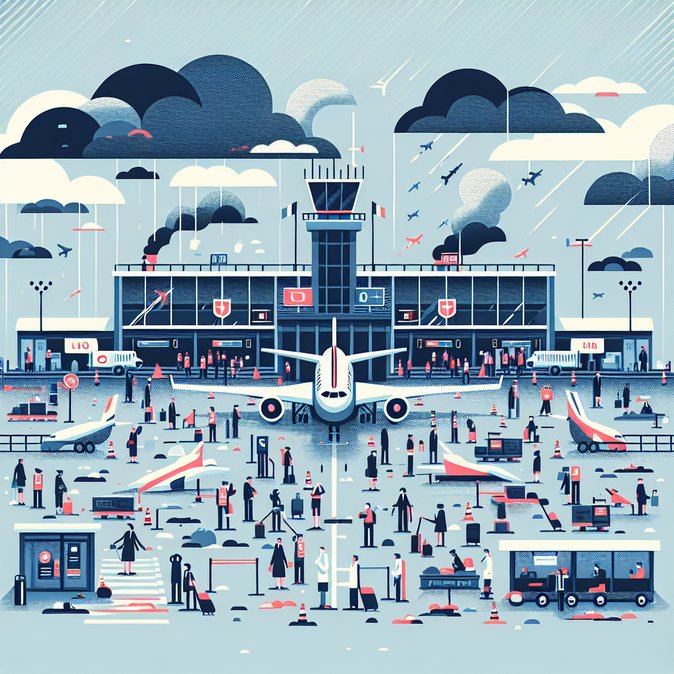
Paris’s two main airports endured another punishing day on 29 December, with real-time data from analytics firm AirHelp showing 379 delayed and 12 cancelled flights at Charles-de-Gaulle and a further 183 delays and two cancellations at Orly. The disruptions—part of nearly 1 000 delays recorded across Europe—hit Air France, easyJet, British Airways and SAS particularly hard, rippling onward to New York, London and Frankfurt.
Airport operator Groupe ADP blamed a cocktail of factors: snow and cross-winds over northern France, air-traffic-control flow restrictions and crew-rostering gaps after a gruelling Christmas weekend. Ground-handling teams struggled to turn aircraft fast enough, leading to knock-on gate shortages and missed connections.
![Paris-CDG and Orly log 562 delays amid Europe-wide weather and staffing crunch]()
For multinationals relocating staff into France for 2026 project kick-offs, the episode is a reminder that December–January remains Europe’s most volatile travel window. Mobility managers should: (1) book assignees on first-wave departures where possible, giving buffer time for re-routing; (2) secure flexible tickets that allow same-day changes without fare penalties; and (3) brief travellers on EU air-passenger-rights Regulation 261/2004, which can trigger compensation once delays exceed three hours.
Looking forward, airlines are drafting reserve crews for 31 December and 1 January, but ADP warns that any fresh weather band could tip the system back into crisis. Companies with critical movements should maintain real-time monitoring and prepare for short-notice hotel or rail alternatives.
Airport operator Groupe ADP blamed a cocktail of factors: snow and cross-winds over northern France, air-traffic-control flow restrictions and crew-rostering gaps after a gruelling Christmas weekend. Ground-handling teams struggled to turn aircraft fast enough, leading to knock-on gate shortages and missed connections.
For multinationals relocating staff into France for 2026 project kick-offs, the episode is a reminder that December–January remains Europe’s most volatile travel window. Mobility managers should: (1) book assignees on first-wave departures where possible, giving buffer time for re-routing; (2) secure flexible tickets that allow same-day changes without fare penalties; and (3) brief travellers on EU air-passenger-rights Regulation 261/2004, which can trigger compensation once delays exceed three hours.
Looking forward, airlines are drafting reserve crews for 31 December and 1 January, but ADP warns that any fresh weather band could tip the system back into crisis. Companies with critical movements should maintain real-time monitoring and prepare for short-notice hotel or rail alternatives.
Source: Travel and Tour World / AirHelp