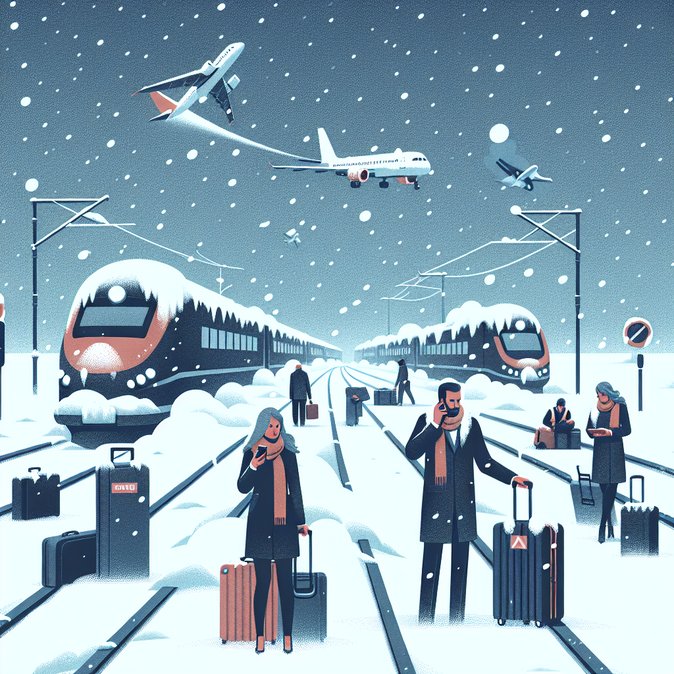
The winter storm that battered Amsterdam, Paris and Brussels earlier in the week swept into Poland on 7–8 January, paralysing domestic transport just as executives resumed post-holiday travel. Warsaw Chopin Airport logged six cancellations and over 230 delays; Kraków–Balice recorded eight cancellations and 45 delays, and LOT diverted two Boeing 737 MAX flights to Katowice and Poznań.
Rail passengers fared little better: PKP Intercity services on north–south corridors ran up to 90 minutes late while parts of the S7 expressway crawled under fresh snowfall. A Europe-wide de-icing-fluid shortage exacerbated apron queues, leaving aircraft on the ground until crew duty times expired.
![Storm Goretti cripples Polish air and rail networks, derailing post-holiday business travel]()
For mobility managers the timing is painful. Many had scheduled employee moves to coincide with Poland’s new MOS e-filing rules; missed onboarding sessions now require costly reroutes, often via Scandinavian hubs only marginally less affected by the weather. Travel insurers report a spike in claims for hotel nights and missed-connection costs.
Airports expect operations to normalise by 9 January if temperatures rise, but urge travellers to build generous buffers and verify that insurance covers extreme weather. Companies with heavy intra-EU travel should revisit duty-of-care policies, ensure travellers carry proof of residence when rebooking via non-Schengen hubs, and consider flexible tickets during the peak winter-weather window.
The episode revives debate over Europe’s hub-and-spoke resilience as climate-driven disruptions become more frequent. In Poland, pressure is mounting on carriers and rail operators to stockpile de-icing fluid and improve real-time passenger information.
Rail passengers fared little better: PKP Intercity services on north–south corridors ran up to 90 minutes late while parts of the S7 expressway crawled under fresh snowfall. A Europe-wide de-icing-fluid shortage exacerbated apron queues, leaving aircraft on the ground until crew duty times expired.

For mobility managers the timing is painful. Many had scheduled employee moves to coincide with Poland’s new MOS e-filing rules; missed onboarding sessions now require costly reroutes, often via Scandinavian hubs only marginally less affected by the weather. Travel insurers report a spike in claims for hotel nights and missed-connection costs.
Airports expect operations to normalise by 9 January if temperatures rise, but urge travellers to build generous buffers and verify that insurance covers extreme weather. Companies with heavy intra-EU travel should revisit duty-of-care policies, ensure travellers carry proof of residence when rebooking via non-Schengen hubs, and consider flexible tickets during the peak winter-weather window.
The episode revives debate over Europe’s hub-and-spoke resilience as climate-driven disruptions become more frequent. In Poland, pressure is mounting on carriers and rail operators to stockpile de-icing fluid and improve real-time passenger information.
Source: VisaHQ – Global Mobility News